If you want to become the most in-demand pickleball coach in your area, it starts with a clear plan — and relentless execution.
Pickleball coaching is growing rapidly. Courts are full. Players want to improve. The demand for qualified instructors has never been higher.
But here’s the truth:
Not every pickleball coach becomes fully booked.
Some coaches struggle to fill their private lesson schedule. Others have waiting lists weeks — even months — long.
So what separates the average instructor from the most wanted pickleball coach in their city?
It isn’t luck.
It isn’t just playing ability.
And it definitely isn’t shortcuts.
Becoming the most sought-after pickleball coach in your area is a long-term strategy. There are no overnight wins. However, there are proven methods that help you build authority, attract serious players, grow your pickleball coaching business, and become the go-to coach in your market.
In this guide, you’ll learn exactly how to:
- Build demand for your pickleball lessons
- Position yourself as the local authority
- Increase your coaching rates
- Create structured programs that players commit to
If you’re serious about becoming the most in-demand pickleball coach in your area — not just another instructor — keep reading.
How to Market Yourself as a Pickleball Coach
Letting people know you are a pickleball coach is not optional — it is your responsibility.
Many talented coaches struggle not because they lack skill, but because no one knows they exist.
When starting to teach pickleball, there are two main ways to build your reputation and grow your coaching career: you can teach for an established company, or you can build your own independent coaching business.
Some coaches choose a hybrid model — teaching for others while also running their own lessons on the side.
Teaching for a company can accelerate your early reputation. You gain access to existing players, structured programming, and built-in marketing. It is often the fastest way to get on the court consistently as a new instructor.
However, the trade-off is income potential.
Most coaches who teach for a company earn between $40 and $60 per hour. If you teach 20 hours per week at $50 per hour, that equals $1,000 per week — or roughly $52,000 per year before taxes. While that provides stability, it makes it extremely difficult to reach six figures solely from pickleball coaching.
Now compare that to teaching independently.
If you charge $120 per private lesson and teach 20 lessons per week, that equals $2,400 per week — or over $115,000 per year. And that doesn’t include additional revenue streams such as clinics, structured training programs, or tournaments.
The difference is simple:
Teaching for others can build your experience faster.
Owning your coaching business raises your income ceiling.
If your goal is to become the most in-demand pickleball coach in your area — and eventually earn six figures — you will need to control your pricing, branding, and program structure.
There are no shortcuts. But there are smarter paths.
The Other Half of the Equation: Visibility
Even if you choose to build your own coaching business, marketing is what turns skill into demand.
Here are the core ways to market yourself as a pickleball coach:
1. Social Media Presence
Post consistently on Instagram, Facebook, YouTube, or TikTok. Share drills, student improvements, tournament highlights, and your coaching philosophy.
People train with coaches they see regularly.
2. Local Clubs and Open Play
Be visible at clubs and open play sessions. Let players know you offer lessons. Demonstrate professionalism and positive energy on the court — reputation spreads quickly in pickleball communities.
Your behavior is marketing.
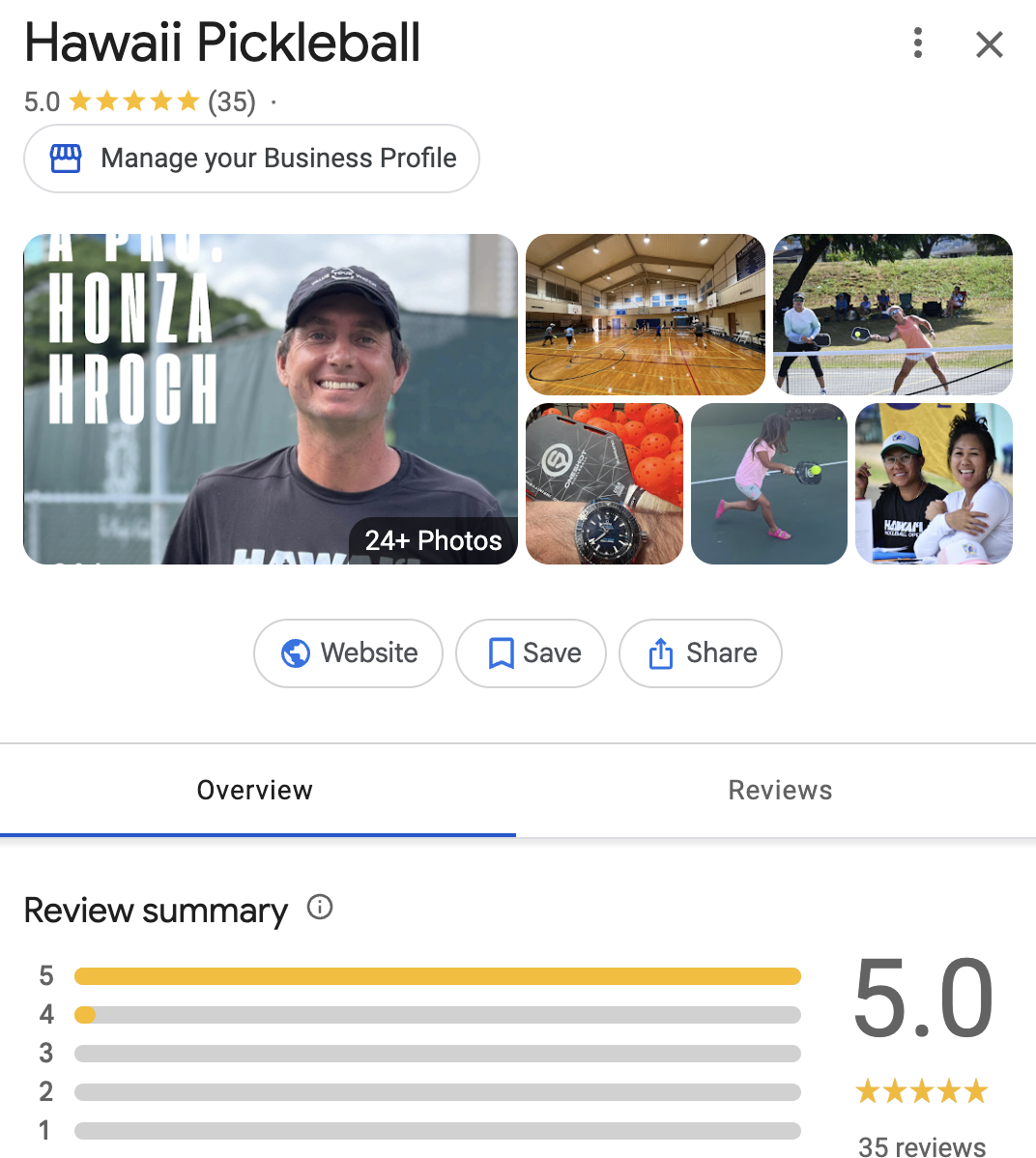
3. Google Reviews
Create a Google Business profile and encourage satisfied students to leave reviews.
When someone searches “pickleball coach near me,” strong reviews build instant trust.
4. Yelp and Local Listings
In many areas, players search Yelp for local sports instruction. A complete profile with photos and reviews increases credibility.
5. Professional Website
A clean website separates hobby instructors from serious coaches.
Your site should clearly list:
- Services
- Pricing
- Testimonials
- Structured programs
- Contact information
Being visible online and active in your local pickleball community accelerates awareness of your coaching skills and builds trust faster than word-of-mouth alone.
How to Build Referrals From Current Pickleball Students
The fastest way to grow your pickleball coaching business is not ads.
It’s referrals.
When a current student tells a friend, “You need to train with my coach,” your credibility multiplies instantly. Referral-based growth is how many of the most in-demand pickleball coaches fill their calendars without heavy marketing.
But referrals don’t happen by accident. They are built intentionally.
1. Deliver Noticeable Improvement
Students refer coaches when they see real results.
If your student:
- Wins more matches
- Feels more confident at the kitchen line
- Moves better in transition
- Gets complimented on their improvement
They will naturally talk about you.
The foundation of referrals is visible progress.
2. Create “Wins” Early
New students should experience improvement within the first few sessions.
Fix one clear problem:
- Confident volleys
- Backhand technique
- Third shot drop consistency
- Court positioning
When players feel progress quickly, they become excited — and excited students talk.
3. Ask at the Right Time
Many coaches never ask for referrals.
After a successful session or a tournament win, simply say:
“If you know anyone else looking to improve their pickleball game, I’d love to help them.”
It’s simple, professional, and confident.
4. Build Community, Not Just Lessons
Structured clinics, small group programs, and training cohorts create community.
When students train together consistently, they bring friends. This is why structured 5-week programs often grow faster than one-off private lessons — they create shared experiences.
5. Use Testimonials and Social Proof
Ask satisfied students for:
- Google reviews
- Short testimonials
- Before-and-after feedback
When prospects see positive reviews online, it reinforces word-of-mouth referrals. Searches like “best pickleball coach near me” are heavily influenced by reviews and social proof.
6. Reward Loyalty (Optional but Powerful)
You can offer:
- Discounted group sessions for referrals
- A free drill session for every three new clients referred
- Priority booking access
This isn’t required — but it accelerates momentum.
How to Set Your Pickleball Coaching Rates When You First Start
When you first begin teaching pickleball, pricing can feel uncomfortable.
You may wonder:
Am I charging too much?
Am I charging too little?
What are other coaches charging?
The key is to avoid guessing emotionally.
1. Research Your Local Market
Start by researching what other pickleball coaches in your area charge.
Look at:
You do not need to be the cheapest, but you also should not price yourself as the most expensive coach without proven demand.
If most coaches charge between $60–$120 per hour, positioning yourself within that range gives you a realistic starting point.
2. Price Slightly Below Market to Build Momentum
When you are new, your goal is not to maximize profit immediately — it is to build experience, testimonials, and referrals.
For example:
If the average rate in your area is $90 per hour, you might start at $75–$85 per hour.
This allows you to:
- Fill your schedule faster
- Build confidence
- Create visible student improvement
- Collect reviews
Momentum is more valuable than perfection at the beginning.
3. Focus on Weekly Commitment, Not One-Time Sessions
When setting rates, think long-term.
The real question is not:
“How much can I charge for one lesson?”
The real question is:
“How much are players willing to pay consistently every week?”
Recurring weekly students create stability and predictable income.
If players return week after week at your starting rate, that is confirmation that you are positioned correctly.
4. Avoid Undervaluing Yourself
New coaches sometimes price too low out of fear.
Low pricing can create two problems:
- It attracts price-sensitive clients who do not commit long-term.
- It signals lower perceived value.
Your rate should reflect professionalism, preparation, and structure — not insecurity.
5. Raise Rates Once Demand Stabilizes
Once your schedule fills consistently and students return weekly, you can begin testing gradual increases.
Pricing is a progression:
Start reasonably. Build demand. Increase strategically.
The Real Pricing Formula
Your starting rate should balance:
Market average
Your experience level
Demand
Long-term growth goals
As you improve your structure, results, and reputation, your rates should increase accordingly.
The most in-demand pickleball coaches do not stay at beginner pricing for long.
They evolve with their value.