Teaching the Fundamentals of a Solid Two-Handed Backhand
Using a two-handed backhand in pickleball might seem like an impossible task—especially if you’ve never tried holding the paddle with both hands. But whether you’re just starting or looking to level up your game, the two-handed backhand has a lot of advantages.
Pros:
- Increased control and stability
- More shot variety and spin options
- Greater Power on passes and drives
Cons:
- Requires better footwork and positioning
- It can feel awkward or limiting for players with less mobility or flexibility
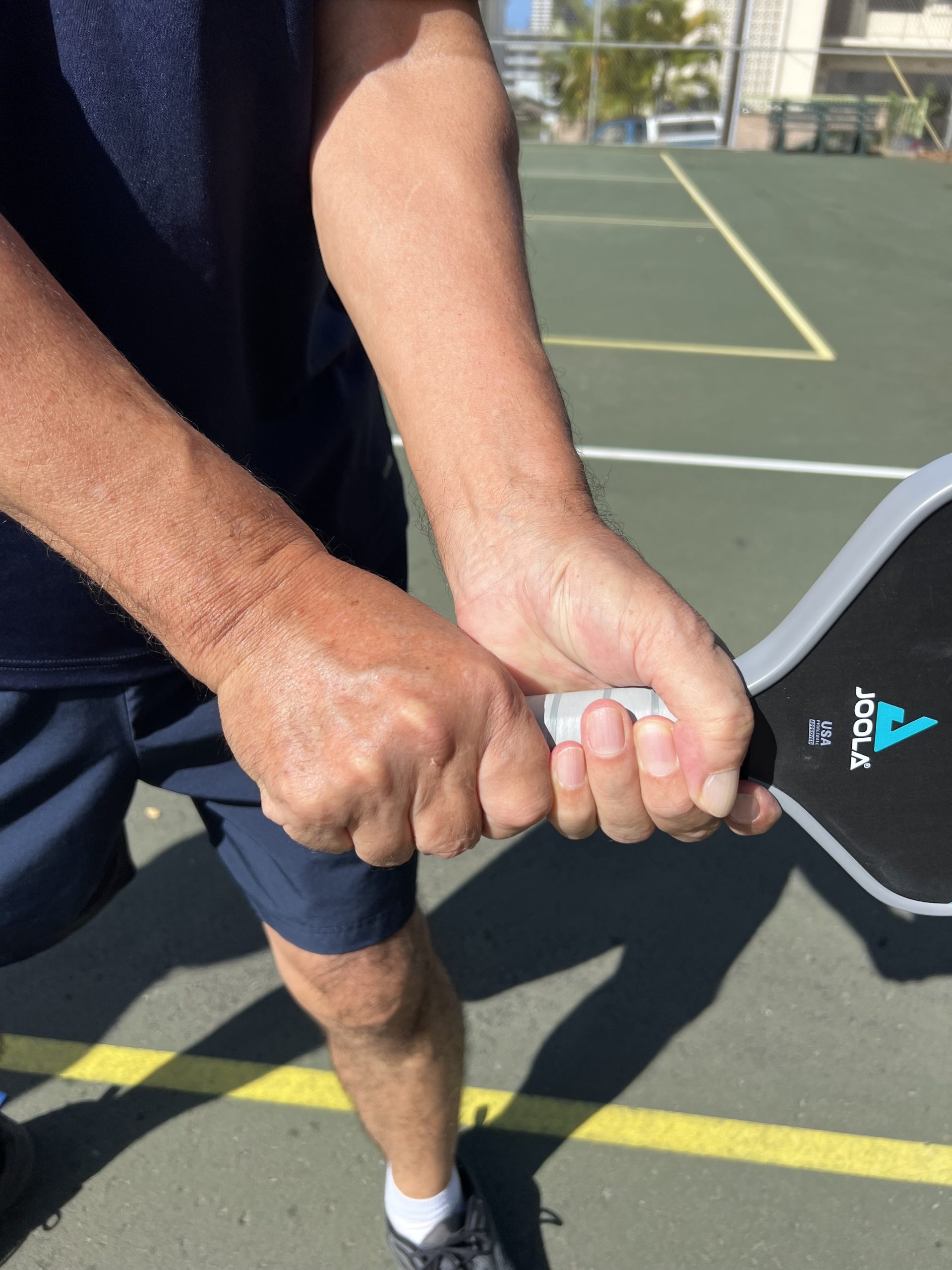
Pickleball Tip: Two-Handed Backhand Grip
✔️ Step-by-Step:
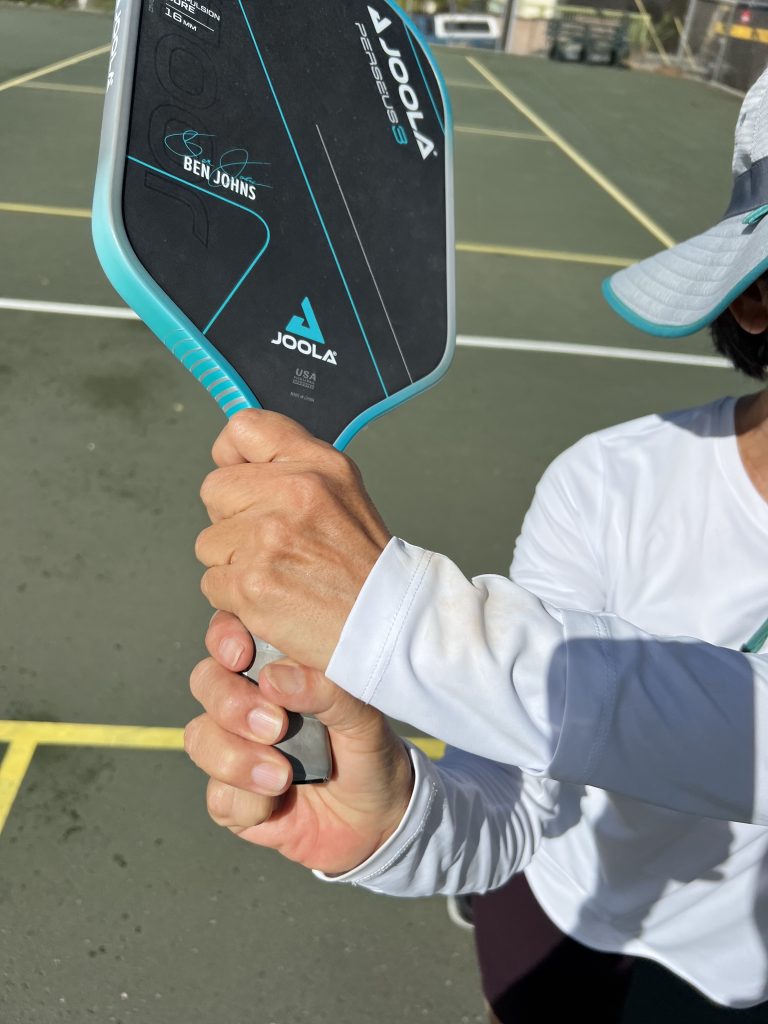
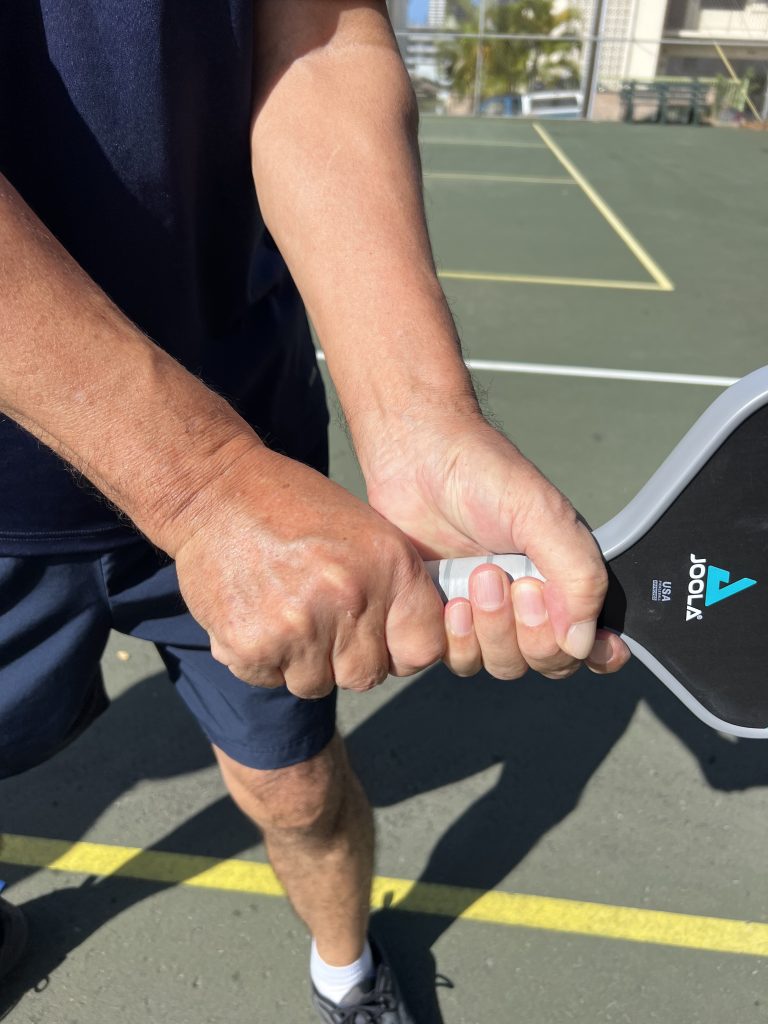
Top Hand (Non-Dominant):
Slide your whole palm up the handle near the neck. Optional: place your index finger on the paddle face for control.
Bottom Hand (Dominant):
Grip just below your top hand—side by side. It’s okay if a few fingers hang off the end.
💪 Why It Works:
✅ More control
✅ More Power
✅ Better shot variety
🔑 Master the grip, master the backhand!
Where to Strike the Ball
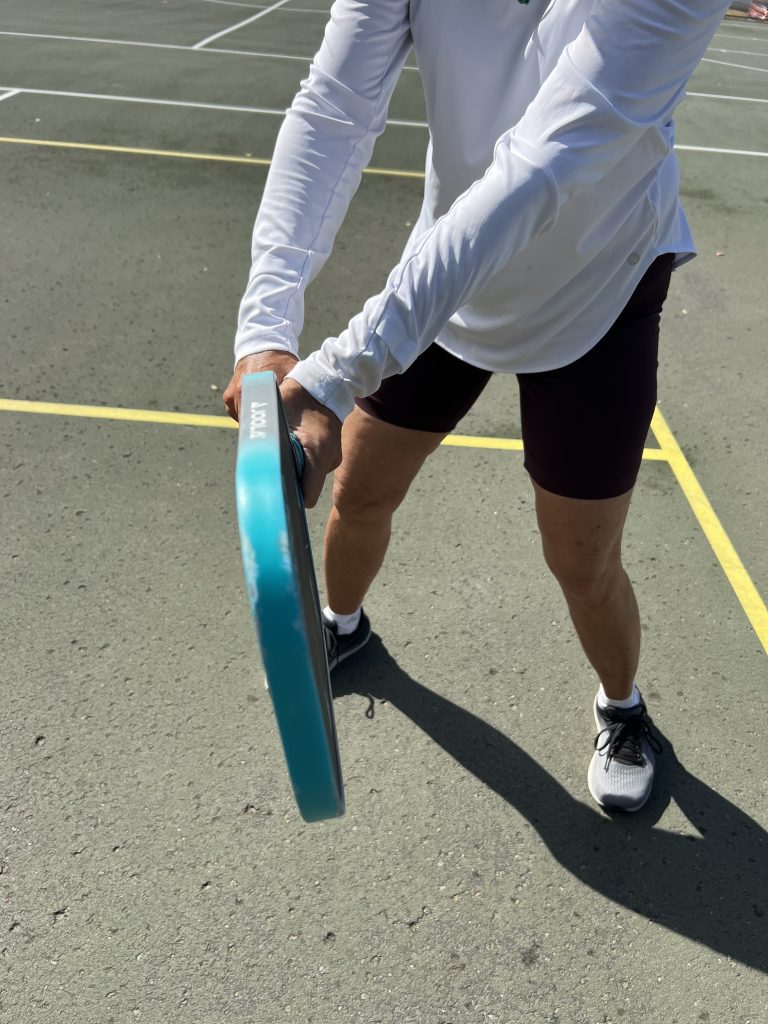
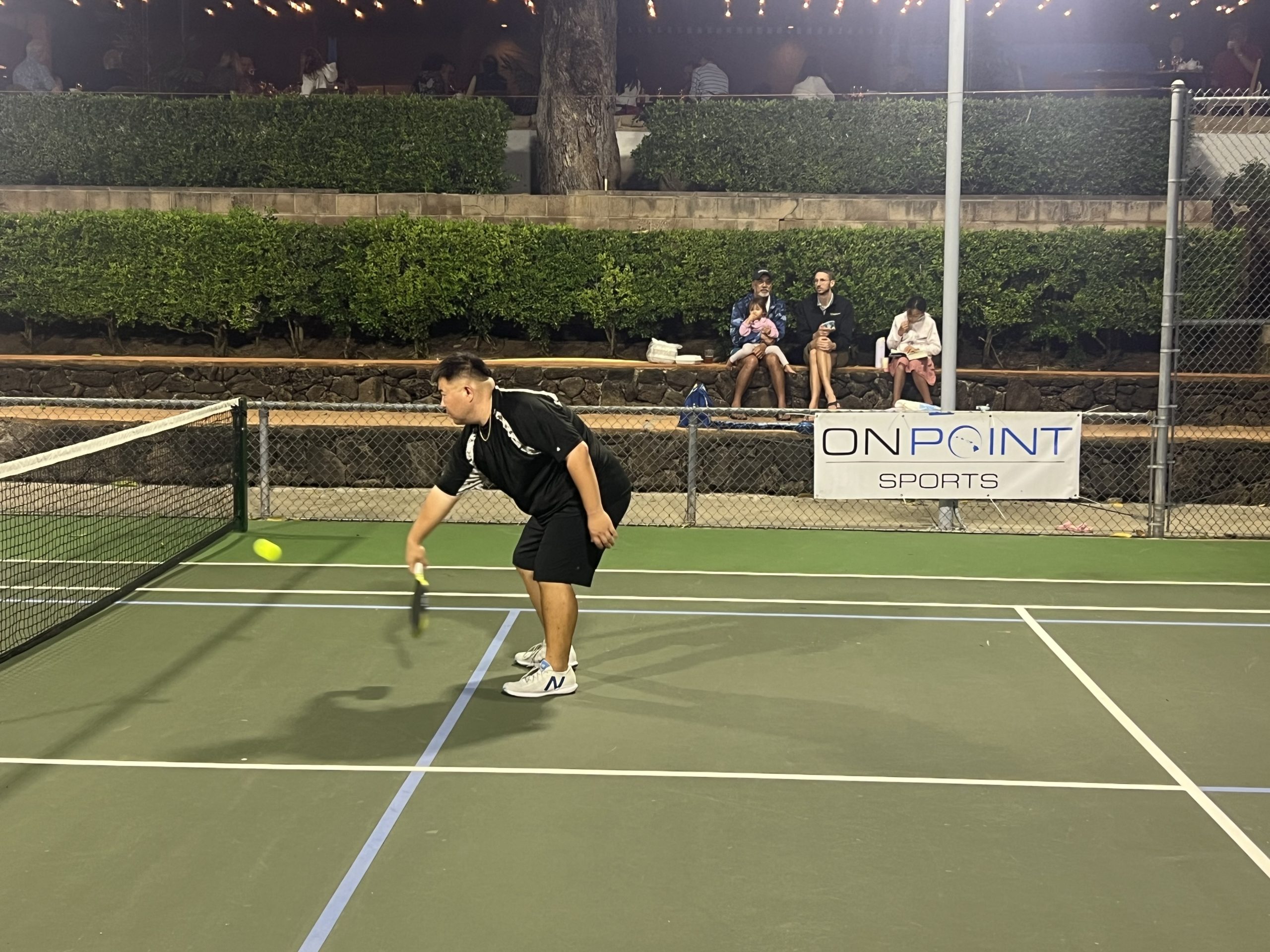
In pickleball, the ideal contact point is around your hip. Whether you’re hitting a fast or soft shot, the ball should be struck close to your hitting side.
But what really matters is what happens before and after contact. Even if you hit the ball cleanly in the center without much preparation or follow-through, it might still land in the general direction you want. However, if you’re aiming for both Power and control, there are key things you need to do.
Getting More Power on Your Backhand
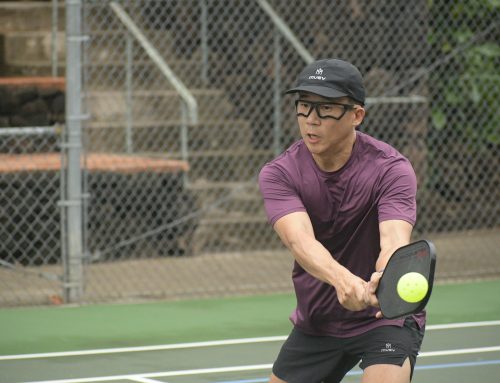
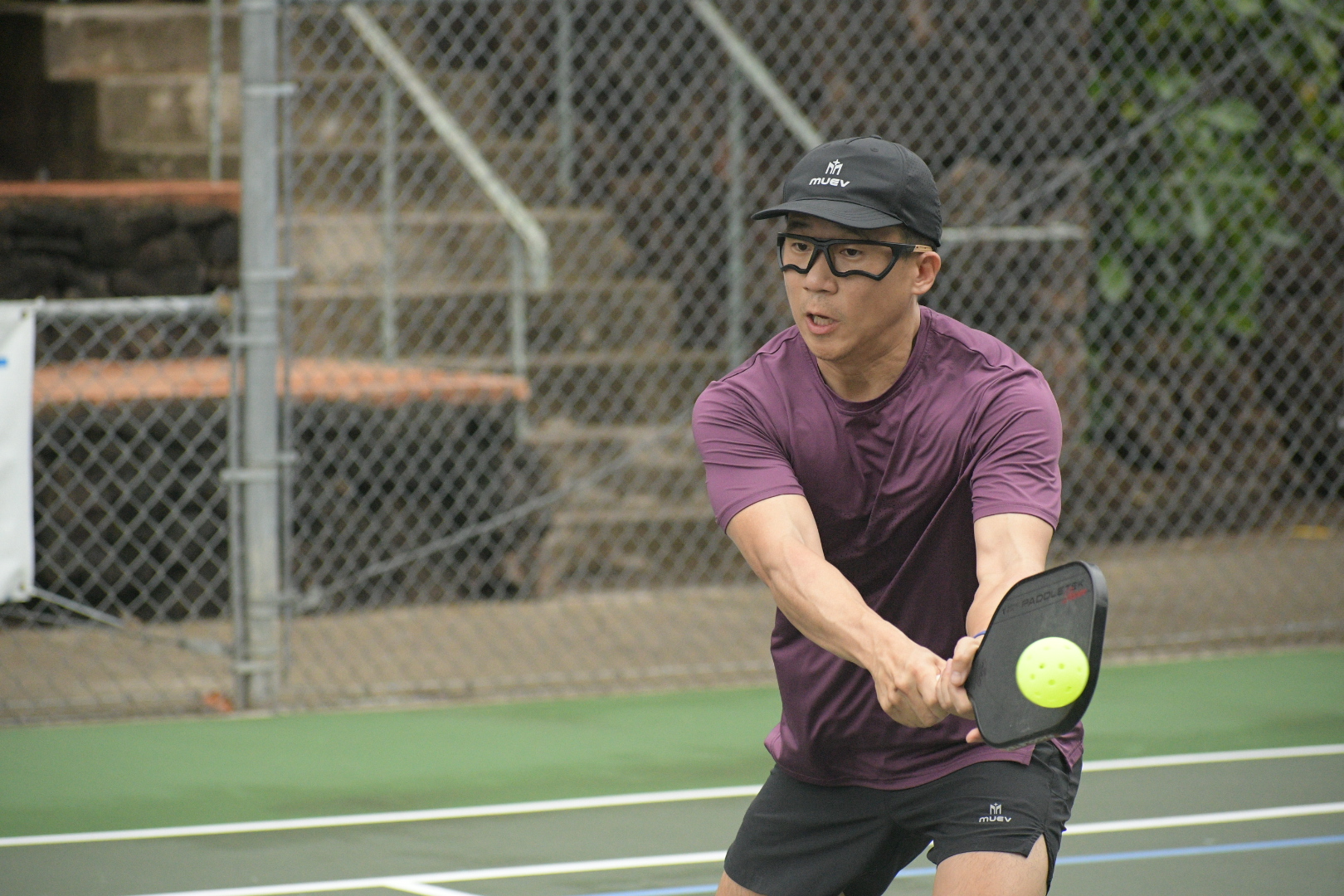
To add Power to your backhand, bend your wrist slightly—almost like you’re about to slap something. This “loading” motion gives your paddle more space to travel, which leads to a snapping effect that generates Power.
Pay attention to your paddle angle before contact. Some players prefer a closed paddle (facing downward), while others use an open one. It all depends on your swing path and comfort.
Finally, don’t forget to finish your stroke. That means letting your hitting arm follow through across your body, and your non-dominant hand should stay engaged—almost becoming the dominant one in the finish. This gives your shot balance, stability, and better control.
Using Hands = direction.
Using Legs = Power
You might wonder, what I mean by “Using Hands = Direction”? Simply put, your hand positioning on the paddle dictates the direction the ball will travel. The angle of the paddle, as well as the angle at which you strike the ball, propels it in a specific direction. Imagine there’s a laser pointer in the middle of your paddle—wherever that laser is pointing when you make contact, that’s where the ball will likely go.
Now, you might be asking, “How do I use my legs to generate more power?” By bending your legs, you gain more lift on the ball—making it easier to hit with topspin. When you bend and lean forward, you generate more force. Think of it this way: during a backhand swing, there’s already momentum from your arm, but when you add your body movement—especially by transferring weight forward using your legs—you gain significantly more Power than by using your arm alone.
If you focus only on generating Power with your arm, you’ll sacrifice control. But when your legs become your main power source, your arms don’t need to swing as hard—allowing for better control of your double-handed backhand.
Double-Handed Dinks
When you’re trying to hit soft dinks into the kitchen—or more aggressive dinks to push your opponents away from the net—a double-handed backhand can be a very effective tool.
The key to hitting good dinks is to push the ball by simply aligning your paddle with the net. The goal is to hit the ball straight. By bending your legs and gently lifting your body, you’ll generate enough Power to get the ball over the net—without swinging the paddle.
Think of your paddle like a wall that’s slightly moving upward: the ball hits it and reflects over the net. No fancy spins are needed—just solid positioning, control, and a gentle lift.
When you’re dinking cross-court rather than straight, you’ll need to strike the ball from the side. What does that mean? Your push should begin earlier, allowing you to make contact with the ball around the 8 o’clock position (if you imagine the ball as a clock). This angle helps guide the ball across the court rather than straight ahead.
If you incorporate your legs, you’ll be able to hit faster and more controlled cross-court dinks. However, this requires your non-dominant hand (top hand on the grip) to actively push the ball upward to achieve the desired arc and direction.
Key Points to Remember When Working on a Double-Handed Backhand in Pickleball:
- Relax both wrists
- Bend the dominant hand slightly
- The non-dominant hand is the power hand
- The dominant hand helps guide the ball
- Lower the paddle tip down before the swing
- Legs = Power
- Arms = Direction
Now it’s time to hit the pickleball courts in Hawaii and improve your two-handed backhand. If you have any questions about how to drill your backhand, email us at info@hawaiipickleball.com.