
The History of Pickleball: How America’s Fastest-Growing Sport Was Born
If you’ve picked up a paddle recently — or even just walked past a park — you’ve probably noticed pickleball is everywhere. From kids in school gyms to retirees playing at sunrise, it’s become the sport that connects generations.
But how did this simple game with funny paddles and a wiffle ball become a global craze? Let’s take a look back at how pickleball began, how it spread, and why it exploded into one of the most inclusive and fastest-growing sports in the world.
A Lazy Summer Day That Started It All
It all began in the summer of 1965, on Bainbridge Island, just outside Seattle, Washington. Three dads — Joel Pritchard, Bill Bell, and Barney McCallum — came home after a round of golf to find their families sitting around bored.
Like many parents, they wanted to get the kids off the couch and doing something active. They had an old badminton court in the yard, but no shuttlecock. So, they grabbed what they could find: table tennis paddles and a perforated plastic wiffle ball.
As they started rallying, they realized the ball bounced surprisingly well on the asphalt. The badminton net was too high, so they lowered it from 60 inches to 36 — and just like that, the foundation for pickleball was born.
The more they played, the more fun it became. Neighbors came over to try, and soon the game wasn’t just a backyard experiment — it was something new entirely.
That same year, the three friends formalized the first pickleball rules, borrowing ideas from badminton, tennis, and ping pong. They made it simple and family-friendly so everyone — kids, parents, and grandparents — could join in.
By 1967, Pritchard’s neighbor Bob O’Brian built the first permanent pickleball court in his backyard. What started as a spur-of-the-moment game was turning into a community movement.

Where Did the Name “Pickleball” Come From?
Now, about that name. Everyone asks: Why on earth is it called pickleball?
There are two main stories.
One version comes from Joel’s wife, Joan Pritchard, who said the mix of different sports reminded her of a “pickle boat” — a rowing term for a crew made up of leftover rowers from other teams.
The other version says the game was named after the family dog, Pickles, who would chase the ball and run away with it.
The truth? Records show the dog was actually born a few years after the game was invented. So, chances are, the dog was named after the game, not the other way around. But either way, “pickleball” stuck — and it’s hard to imagine calling it anything else today.
Pickleball’s Early Growth (1960s–1990s)
Through the 1970s, pickleball began spreading quietly through word of mouth. Families on Bainbridge Island introduced it to friends, who brought it home to their own neighborhoods.
In 1976, the first pickleball tournament was held in Tukwila, Washington. It drew tennis players curious about this new sport. The paddles were still made of wood, and the balls were oversized, but the competition was real — and the energy was contagious.
By the early 1980s, a small but passionate group of players wanted to grow the sport beyond backyard play.
A major breakthrough came in 1984 when Boeing engineer Arlen Paranto created the first composite paddle using fiberglass and honeycomb materials from airplane panels. It was stronger, lighter, and far more precise — a major leap forward for the game.
That same year, the United States Amateur Pickleball Association (U.S.A.P.A.) was formed. They published the first official pickleball rulebook, giving the sport a proper structure and legitimacy.
By 1990, pickleball was being played in all 50 states — a huge milestone for a sport that started in one backyard just 25 years earlier.
The 2000s: Pickleball Finds Its Place
As the 2000s rolled in, pickleball started to gain serious traction. In 2001, it was featured in the Arizona Senior Olympics, attracting over 100 participants. For the first time, people realized this wasn’t just a backyard hobby — it was a sport for all ages.
Over the next few years, the numbers exploded. By 2005, the USA Pickleball Association was officially founded, and the sport began to appear in schools, retirement communities, and local parks across the country.
In 2009, the first National Pickleball Tournament took place in Buckeye, Arizona, drawing nearly 400 players from 26 states and several Canadian provinces. That event helped cement pickleball as a serious, competitive sport.
Then came media coverage. Good Morning America aired a live segment, showing the fun, fast-paced nature of the game to millions of viewers. Suddenly, everyone wanted to grab a paddle.
The Biggest Boom: During and After COVID-19
Although pickleball had been growing steadily for decades, the real explosion came during and after the COVID-19 pandemic.
When gyms and team sports shut down, people were desperate for ways to stay active and social while still being safe. Pickleball was the perfect solution — you could play outside, keep your distance, and still connect with others.
Families who had never played before started painting court lines in their driveways or setting up portable nets in cul-de-sacs. The equipment was inexpensive, and the rules were easy to learn, so it quickly became the go-to activity for all ages.
It didn’t matter if you were a teenager, a grandparent, or a complete beginner — you could pick up the game in one afternoon.
The combination of accessibility, affordability, and togetherness made pickleball explode across the country.
By 2021, participation had grown by over 300% in just two years. Neighborhood parks couldn’t keep up with demand. Cities began converting unused tennis courts into pickleball courts, and dedicated pickleball centers popped up across the U.S.
For four straight years, the Sports & Fitness Industry Association named pickleball the fastest-growing sport in America. By 2024, more than 19 million Americans were playing.
The beauty of pickleball was its simplicity — all you needed was a flat surface, a net, and a few paddles. That’s why it became a lifeline during lockdowns and stayed popular long after. It reminded people how fun it is just to move, laugh, and play together.
Pickleball Goes Pro
As the sport’s popularity soared, so did the competition.
In 2019, two professional tours launched: the Professional Pickleball Association (PPA) and the Association of Pickleball Players (APP). Both helped transform pickleball into a professional sport with televised matches, sponsorships, and prize money.
Stars like Ben Johns, Anna Leigh Waters, and Tyson McGuffin became household names in the pickleball world. Tournaments like the U.S. Open Pickleball Championships and National Championships started drawing thousands of players and spectators.
By 2023, even celebrities and professional athletes were getting involved. NBA legends LeBron James and Kevin Durant, NFL quarterback Drew Brees, and entrepreneur Gary Vaynerchuk all invested in professional pickleball teams.
This surge in media attention helped pickleball cross into mainstream culture — suddenly, everyone wanted to play.
Pickleball Around the World
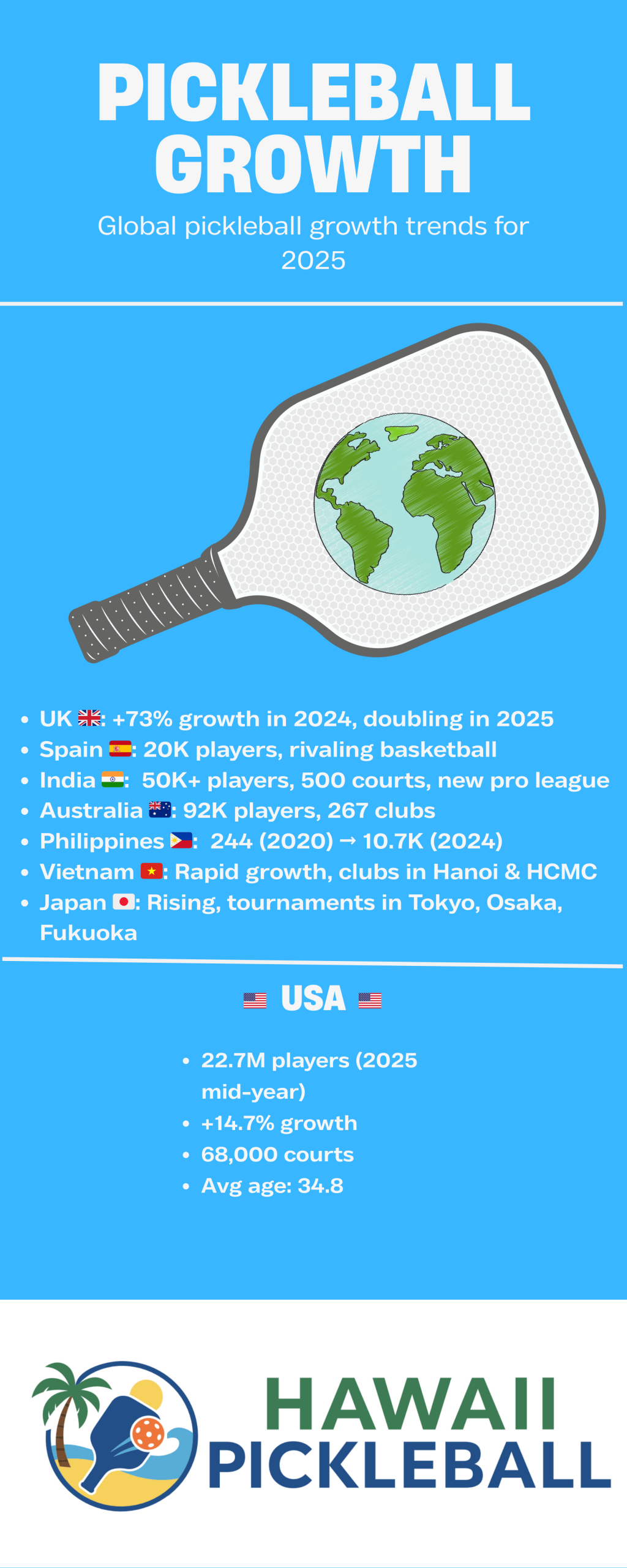
While the sport’s roots are American, pickleball has now spread across the globe. Canada, the UK, Australia, Thailand, India, and the Philippines all have national organizations and growing player bases.
In fact, pickleball is growing faster internationally than ever before. Professional tours are being created in Asia and Europe, and the dream of one day seeing pickleball in the Olympic Games is no longer far-fetched.
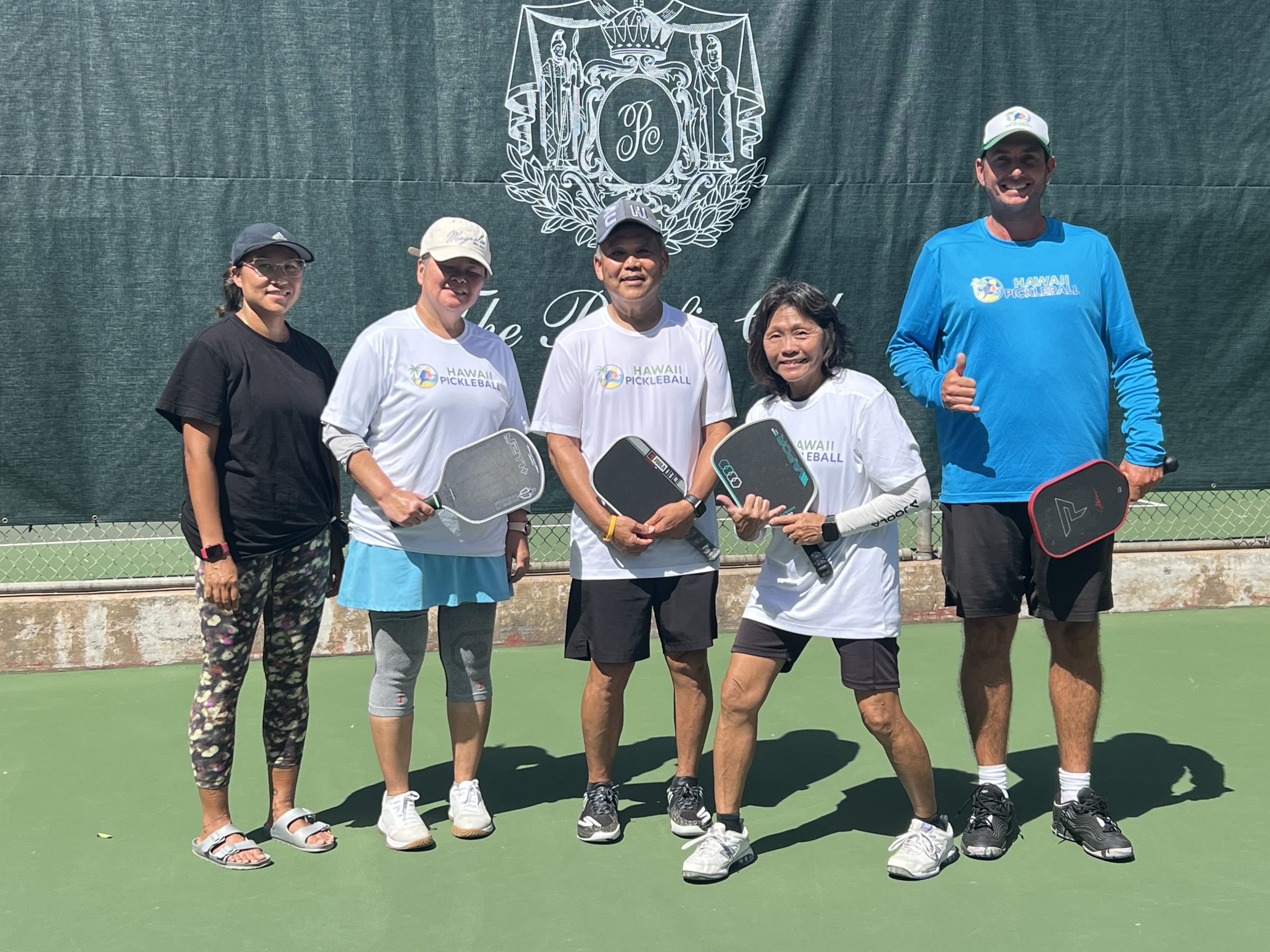
It’s also making its mark right here in Hawai‘i. Locals have embraced the game’s friendly, community-based spirit. Some even call it pukaball — “puka” meaning “hole” in Hawaiian — a perfect local twist on the sport’s name.
Pickleball isn’t just a sport here; it’s become a social movement that brings people together — from morning players at public parks to sunset games near the beach.
Why Pickleball Works for Everyone
At its core, pickleball is easy to learn but hard to master — and that’s what makes it so addictive.
The smaller court and slower ball mean rallies last longer, which keeps everyone engaged. The rules are simple, and the paddles are lightweight, so even beginners can rally within minutes. And if you want to improve, there’s no shortage of great pickleball coaches who can help you fine-tune your shots, movement, and strategy.
It’s also one of the few sports where you’ll regularly see three generations playing together — parents, kids, and grandparents all sharing the same court, laughing and learning side by side.
That accessibility has been one of the biggest reasons for its growth. You don’t need to be tall, fast, or super fit to enjoy the game. You just need a paddle, a friend, and a willingness to have fun.
As more cities invest in public courts and schools add pickleball to their PE programs, the momentum keeps building. And now, pickleball tourism is on the rise too — players are packing their paddles and traveling around the world to join tournaments, vacation clinics, and social play events. The beauty of the game is that you can take it anywhere. A paddle fits easily in your bag, and the welcoming pickleball community makes every court — from Seattle to Sydney to Hawai‘i — feel like home.
From Backyard Game to Global Phenomenon
Looking back, it’s amazing to think how something invented with borrowed equipment could become a worldwide sport.
From three dads on Bainbridge Island in 1965 to millions of players worldwide, pickleball has come a long way — and it’s still evolving.
The game’s mix of competition, connection, and community has struck a chord with people of all ages. It’s fun, social, and good for you — a rare combination that continues to bring people together.
And that’s what makes pickleball special. It’s not just about rallies and points; it’s about the friendships formed between them.