How to Play Pickleball: A Complete Beginner’s Guide (Rules, Tips & Strategy)
Pickleball is one of the fastest-growing sports in the world — and for good reason. It’s easy to learn, fun at any age, and combines the best elements of tennis, badminton, and ping-pong. You don’t need to be athletic to enjoy the game and have a great time. There’s no “right” or “wrong” way to play for fun, but understanding a few fundamentals — including the basic rules, how to serve, scoring, strategy, and common mistakes to avoid — will help you improve faster and enjoy the game even more
What Is Pickleball?
Pickleball is a paddle sport founded in 1965 and played on a court similar in size to a badminton court, using a plastic ball with holes (similar to a wiffle ball). You can play with a portable net or a permanent net on dedicated pickleball courts. Games can be singles (1 vs. 1) or doubles (2 vs. 2), but most players prefer doubles because having more people on the court makes the game more social, fun, and entertaining.
If you want to learn more about the history of pickleball, you can visit the link below.
The History of Pickleball: How America’s Fastest-Growing Sport Was Born
Official Pickleball Court Dimensions (Simple Breakdown)
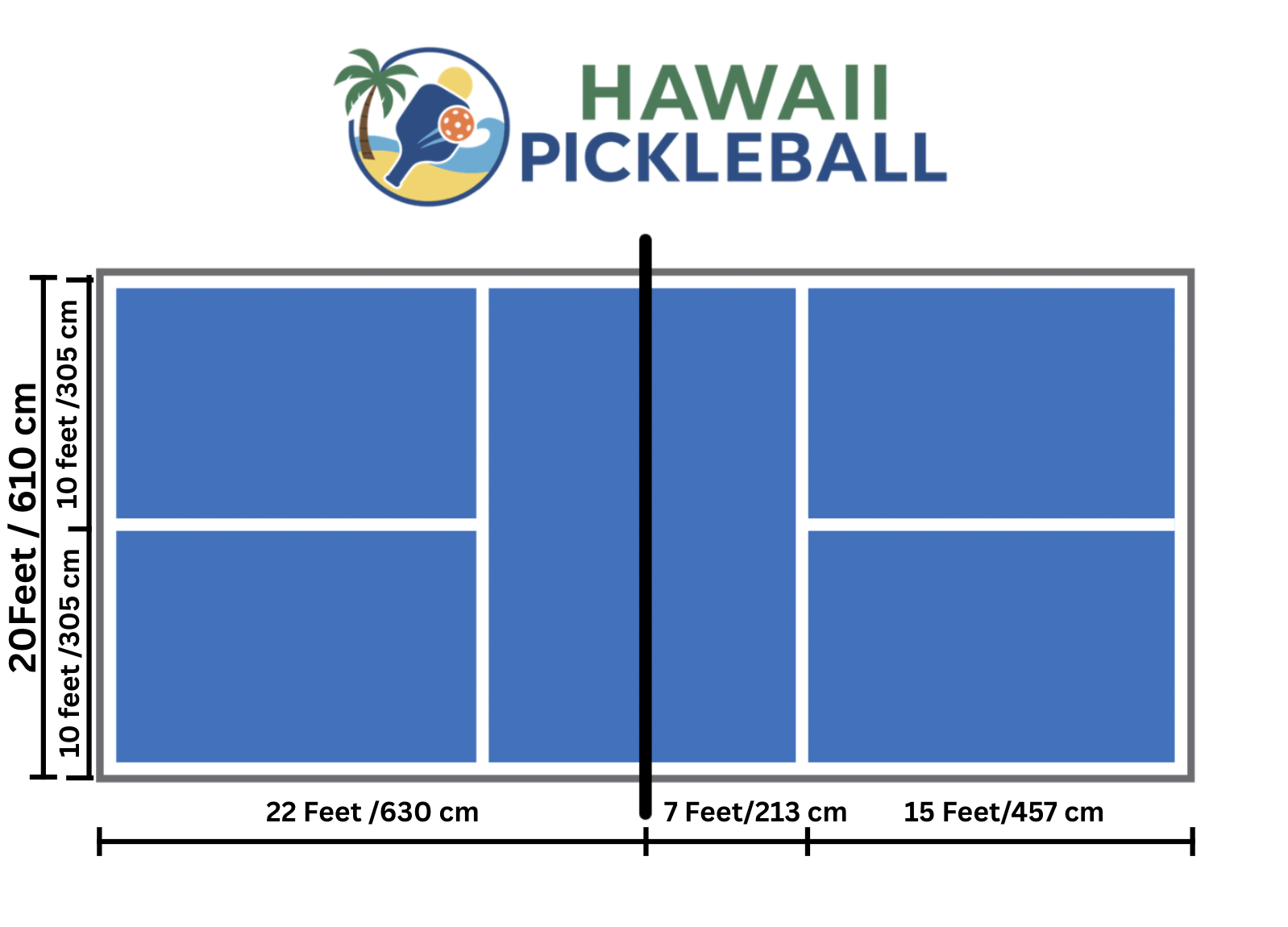
A standard pickleball court is:
20 feet (610cm) wide × 44 feet (1341cm)long
(Same for singles and doubles)
Key Pickleball Court Measurements
Non-Volley Zone (“Kitchen”)
-
7 ft deep (213 cm) on each side of the net
-
Total NVZ area = 14 ft (7 ft + 7 ft)
The Non-Volley Zone (also called the Kitchen) is the area on the court where you cannot step inside if you are hitting the ball in the air. You can reach over the kitchen to hit a volley, but your feet — and anything you’re wearing or carrying — must stay completely outside the zone. After hitting the volley, you must also make sure your momentum doesn’t cause you to step into the kitchen. If you land inside the Non-Volley Zone after a volley, even one step, you lose the point.
Service Areas
Each side of the court has two service boxes
-
10 ft (305cm) wide × 15 ft (710cm) deep each
-
Width = half of 20 ft → 10 ft
-
Depth = 15 ft (457cm) from kitchen line to baseline)
When you are serving, both of your feet must stay behind the baseline. The serve must be hit cross-court into the diagonal service box. If the ball lands on the kitchen line, the serve is short and considered a fault. To be legal, your serve must clear the kitchen entirely and land anywhere inside the correct service box across from you.
Net Height
-
36 inches (3 ft) at the sidelines
-
34 inches at the center
Complete Measurement Summary
| Court Feature | Measurement |
|---|---|
| Total Court Length | 44 ft |
| Total Court Width | 20 ft |
| Non-Volley Zone Depth | 7 ft (each side) |
| Service Area Length | 15 ft |
| Service Area Width | 10 ft |
| Net Height (center) | 34 in |
| Net Height (posts) | 36 in |
How to Start a Pickleball Point
The game always begins with a serve. Here’s how it works:
Serving Rules
- Serve must be underhand.
- Contact the ball below your waist.
- Serve must land cross-court in the opposite service box.
- Only one attempt (no second serves like tennis).
- The serve must clear the kitchen.
The Double Bounce Rule for the Pickleball Server
This is the rule that confuses most new players. After you serve, you are not allowed to hit the ball in the air right away. The return from your opponents must bounce on your side before you can hit it. This is called the “Double Bounce Rule.” First, your serve must bounce on their side, and then their return must bounce on your side. If you hit the ball before it bounces on your side, it’s a fault, and you lose your serve (or move to the second server, depending on whether you were Server 1 or Server 2).
Pickleball uses side-out scoring, which means only the serving team can score. This confuses a lot of new players because keeping track of the score — and who should be serving — can feel challenging at first.
In Pickleball, the score is three numbers:
Your score – Opponent’s score – Server number (1 or 2)
Example: 5 – 3 – 1
Games typically go to 11 points, win by 2.

When does the second server serve?
Each team has two chances to serve: Server #1 and Server #2.
After Server #1 loses the rally, Server #2 serves next.
Once both servers lose their serve, it’s a side-out, and the other team gets the ball — starting again with their Server #1.
Pickleball Scoring Made Simple: Learn Traditional & Rally Scoring Easily
How to Play a Point: The Flow
-
Serve cross-court.
-
Opponents return the ball (must bounce).
-
Serving team lets it bounce.
-
After two bounces total, you rally until someone:
-
Hits into the net
-
Hits out of bounds
-
Volleys in the kitchen
-
Misses a shot
-
That’s the basic flow of a point, but in reality, when players are relatively new, rallies move fast and most people hit hard at each other — and they’re having a blast doing it. As players improve, the game starts to look more like a chess match, with each shot being intentional and players thinking several moves ahead.
Basic Pickleball Strategy for Beginners
1. Get to the Kitchen Line
The team that controls the kitchen line usually wins the point. However, if you’re new, it can be challenging to hit soft shots into the kitchen, which makes getting to the line harder. And once you do get there, be ready — many players will try to speed the ball up at your body, forcing you to react quickly and volley the ball right back.
2. Keep the Ball Low
High balls get smashed, and that’s part of what makes pickleball so fun. Hitting the ball down at your opponent’s feet is exciting — but the players who control the height of their shots, especially by keeping the ball low, are far less likely to get attacked by the other team.
3. Serve Deep, Return Deep
Deep shots push your opponents back and give you more time. In pickleball, the player who controls the point is also the one who controls the pace of the game. When you think a few steps ahead, you give yourself a much better chance to set up the next shot and win the rally.
4. Be Patient — Especially in the Kitchen
Don’t try to kill every ball. Many points are won through consistency. Slowing down the rally gives you a much better chance to stay in control and avoid unnecessary mistakes that can cost you the point.
Common Mistakes to Avoid During your Pickleball Game
❌ Rushing into the Kitchen on the Return
Let the ball bounce first when your team served — that’s the double bounce rule.
❌ Hitting Hard When You’re Off-Balance
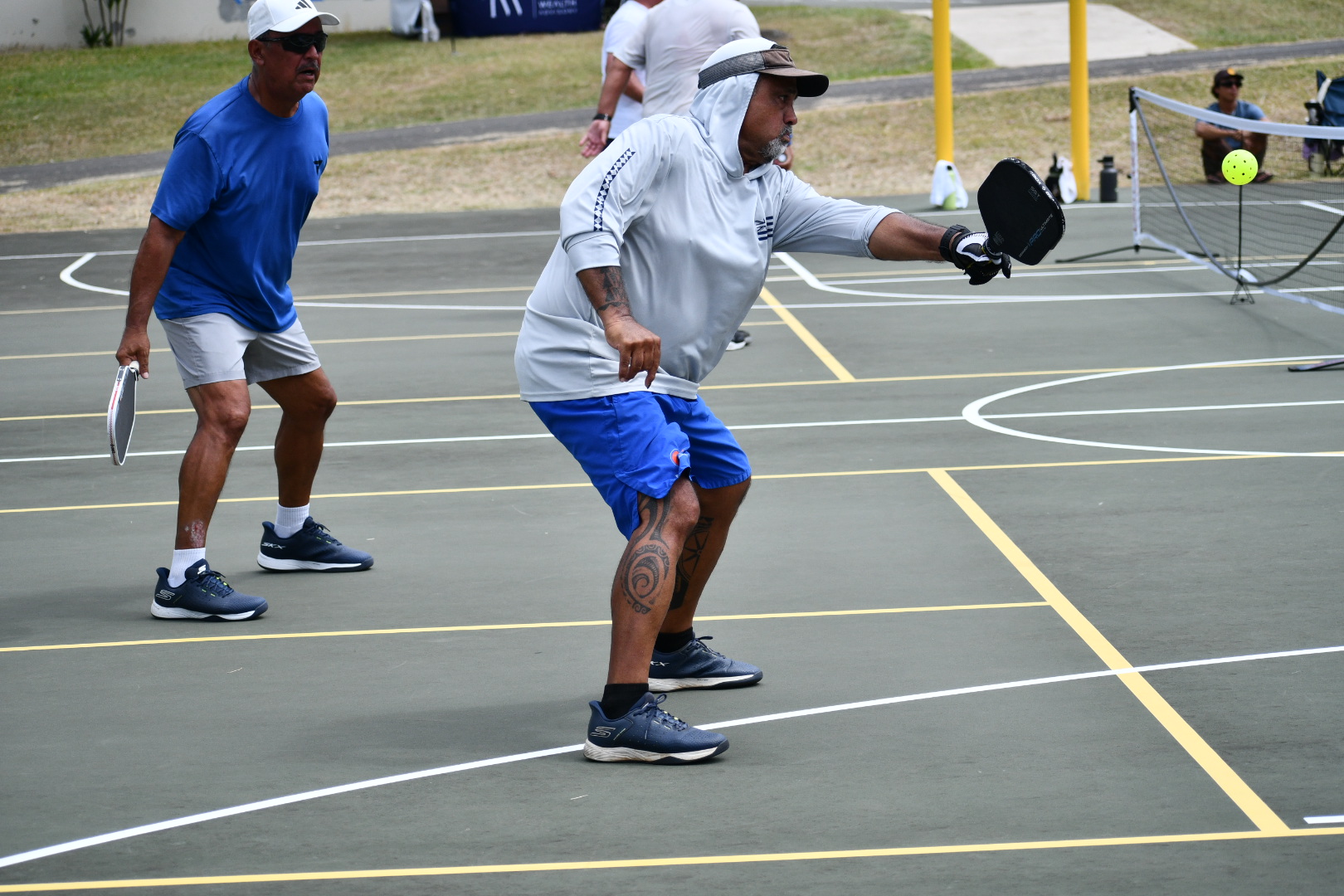
Swinging too hard while you’re running or off-balance often leads to mistakes. Staying balanced keeps the point under your control.
❌ Standing in “No-Man’s Land”
Move all the way up to the kitchen line or stay back. The middle area is where most balls land at your feet — the toughest shots to return.
❌ Foot Faults in the Kitchen
You cannot volley with any part of your body touching the kitchen line or inside the zone. Many players forget they can’t step into the kitchen while hitting a volley.
Equipment You Need to Play Pickleball
Paddle:
Avoid the cheap wooden paddles. Any paddle priced around $100 or more will give you a much better playing experience. Cheaper paddles often have poor grip, less control, and make the game harder than it needs to be.
Pickleballs:
-
Outdoor balls are faster and bounce lower.
-
Indoor balls bounce higher and are a bit slower.
Choose the right type based on where you’re playing.
Shoes:
Court shoes — like tennis shoes — are highly recommended. Running shoes can be dangerous on the court because they increase the risk of twisting an ankle.
Net:
Some places don’t have permanent nets. A good portable net costs around $100 and can last quite a while.

How to Get Better Fast in Pickleball
The fastest way to get better at pickleball is to take private or group lessons, which help players learn the fundamentals quickly and avoid bad habits. Another great option is to ask friends who already play pickleball to show you the basics and practice with you. If you don’t have anyone available to play, services like Pickle Partner Up can help you hire experienced players to hit with and help you improve.
Conclusion
Learning how to play pickleball is simple, fun, and incredibly rewarding — no matter your age or athletic background. Once you understand the basic rules, the court layout, the double bounce rule, and how scoring works, you’ll feel confident stepping onto any court. As you improve, the game becomes even more exciting, shifting from fast-paced rallies to thoughtful, strategic points that feel like a chess match on a smaller court.
Focusing on fundamentals such as getting to the kitchen line, keeping the ball low, hitting deep serves and returns, and staying patient will help you win more points and enjoy the sport even more. Avoiding common mistakes — like rushing forward too early, swinging off-balance, standing in no-man’s land, or stepping into the kitchen on a volley — will make a big difference in your consistency.
With the right equipment, a bit of practice, and maybe a lesson or two, you’ll improve quickly. Whether you’re learning from friends, taking a class, or using services like Pickle Partner Up to find someone to hit with, there are plenty of ways to accelerate your progress.
Pickleball is more than just a sport — it’s a social, welcoming community that keeps growing every year. Get out there, have fun, play smart, and enjoy the journey of becoming a better pickleball player. If you keep showing up, staying patient, and focusing on the fundamentals, you’ll be surprised how fast your game improves.