
5 Ways to Generate More Power on Your Pickleball Forehand
More power does not come from muscling the paddle. It comes from cleaner contact, better timing, body rotation, weight transfer, and smooth acceleration that you can still control.
Updated September 2026
One of the most satisfying shots in pickleball is a forehand that feels effortless but still comes off the paddle with pace. The key is not swinging as hard as possible. It is getting more of your body working together and contacting the ball in a position where you can accelerate without losing balance.
1. Create a Better Contact Point
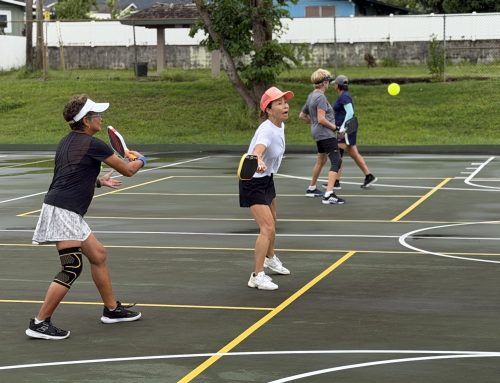
Power becomes easier when you contact the ball slightly in front of your body with enough space to swing freely. If the ball gets too close to your hip or behind you, the stroke becomes cramped and you have less room to accelerate.
This is different from the paddle's sweet spot. The sweet spot is the responsive area on the paddle face. Your contact point is where the ball meets the paddle relative to your body. Good forehands need both.
2. Use Smooth Acceleration Instead of a Forced Swing
A relaxed arm can accelerate faster than a tense one. Start the forehand with enough preparation to create a smooth path, then gradually increase paddle speed through the contact zone.
Many players lose power because they swing at maximum effort too early. The stroke becomes tight before the paddle ever reaches the ball.
A low-to-high component can help create topspin, but the exact swing path depends on the height of the ball and the shot you are trying to hit.

3. Rotate the Shoulders and Torso
Using only the arm limits both power and consistency. Let your shoulders and torso turn during preparation and then rotate toward the target as the paddle comes through.
The body does not need a huge tennis-style coil on every pickleball forehand. Compact rotation is often enough, especially when you are closer to the kitchen. The farther back you are and the more time you have, the more room you may have for a fuller turn.
4. Transfer Your Weight Into the Shot
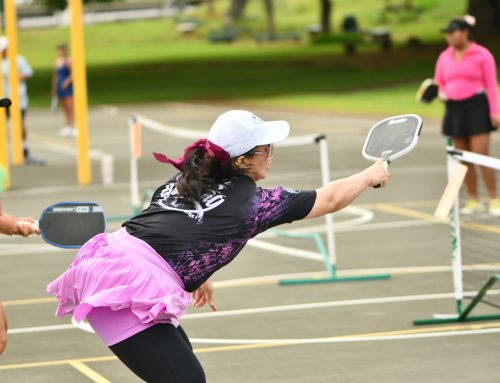
When you have time, allow your body weight to move in the direction of the shot. That might be a step through the ball, a semi-open stance with rotation, or a more open stance when the ball arrives quickly.
The older version of this article prescribed one specific stance for right-handed players. I would not teach the forehand that way. Pickleball requires several stances because the ball can arrive too quickly for a full step-in pattern every time.
What About the Wrist?
I would not teach most players to intentionally “snap” the wrist at contact. That cue can make the paddle face unstable and create timing problems.
Instead, keep the hand and forearm relaxed enough that the paddle can accelerate naturally. Advanced players may use more forearm rotation or wrist movement depending on the shot, but the movement should support the swing rather than become a last-second flick at the ball.
5. Learn to Hit the Ball on the Rise
Taking the ball shortly after the bounce can make your forehand feel more powerful because you are meeting the ball earlier and reducing the opponent's recovery time.
You can also use some of the incoming pace instead of waiting for the ball to slow down. But hitting on the rise is a timing skill. If your contact becomes late or rushed, the advantage disappears quickly.
Start at moderate pace and focus on clean contact before trying to attack the ball harder.
A Simple Forehand Power Practice
- Hit 10 controlled forehands at about 50–60% pace and focus only on contact in front.
- Hit 10 more while adding shoulder rotation.
- Add a small weight transfer or step when the feed allows it.
- Increase paddle speed only if the ball is still landing where you want.
- Finish by alternating normal-bounce balls with balls taken on the rise.
If accuracy disappears when you increase pace, reduce the speed and rebuild the movement. Power is only useful when you can repeat it.
Grip: Start With Something Comfortable and Adjustable
There is no single forehand grip that every pickleball player must use. Many players use an Eastern-style forehand grip or a grip somewhere between Eastern and Continental for groundstrokes, while others rotate more depending on the shot.
The most important thing is that your grip lets you control the paddle face and move efficiently between forehands, backhands, volleys, and resets.

Final Thoughts
A powerful forehand is usually the result of efficient mechanics rather than raw strength. Contact the ball in front, stay relaxed, rotate the body, transfer weight when the situation allows it, and improve your timing.
Once those pieces are working together, you can swing faster without feeling like you are forcing the shot.
Want to Build a More Powerful Forehand?
Hawaii Pickleball Academy® offers private lessons and small-group training focused on technique, movement, and repeatable shot production.
Explore Pickleball Lessons