
Aggressive vs. Soft Pickleball: When to Use Each Style
Good pickleball is not about choosing between power and softness forever. The better player is the one who can recognize when to speed the point up and when to slow it down.
Updated September 2026
During this clinic, we practiced both aggressive and soft approaches because players need both. If you only know how to hit hard, better opponents eventually use your pace against you. If you only play soft, you may miss obvious attacking opportunities.
Aggressive Approach to the Net
We started with faster third-shot drives and approach balls. The idea was not simply to hit hard. The target mattered.
Body and hip-area targets can be effective because they reduce the space an opponent has to take a full swing. A ball directly into someone's strongest contact point can be much easier to counter than a slightly slower ball placed into an awkward area.
Defending the Drive
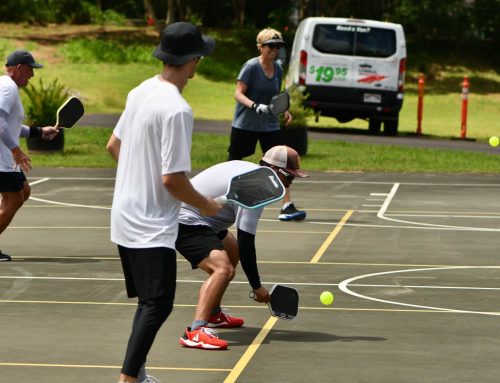
For the players at the kitchen, the focus was compact blocking and counter punching. When a fast ball is already coming at you, you do not need a large swing.
- Get the paddle prepared early.
- Keep contact in front.
- Use the incoming pace instead of adding too much of your own.
- Control the paddle face so the ball stays low.
Sometimes the right answer is a firm counter. Other times the better answer is simply absorbing the ball and keeping the rally neutral.
Mid-Court Drive vs. Mid-Court Reset
This was the part of the clinic where the difference between the two styles became very clear. From the transition zone, players had to decide whether they were balanced enough to attack or whether they needed to slow the ball down.
The reset was harder for many players, which is normal. Transition-zone resets require soft hands while you are still moving and reacting to pace.
What We Learned in Full-Court Games
Once we played live points, it became obvious that neither style works all the time.
Hitting hard can create pressure, but it also makes the ball return faster. If you attack from a poor position, you may create less time for yourself than for the opponent.
Slowing the point down can feel less exciting, but it often creates enough time to move forward and get established at the kitchen.
Simple Decision Questions
- Am I balanced?
- Is the ball high enough to attack?
- Is my opponent ready for pace?
- Will this shot help me move forward or trap me in transition?
- If the ball comes back faster, am I ready?
Final Takeaway
The aggressive game and soft game are not opposites. They are tools. The better you become at both, the easier it is to choose the one that fits the ball in front of you.
Want to Practice Both Styles?
Hawaii Pickleball Academy® offers level-based monthly clinics and small-group training around Oʻahu.
View Current Clinics