
How to Improve at Pickleball: Open Play, Practice & Lessons
Playing more helps, but playing more is not always the fastest way to improve. The biggest gains usually come from combining live games with deliberate drilling, useful feedback, and enough repetition to make the change stick.
Updated September 2026In Hawaiʻi, players have to be a little creative. Court availability varies by area, open play can be busy, and you may not always have a perfect practice partner available. The good news is that you can still build a very effective training routine using several different options.
1. Use Open Play to Test Your Game
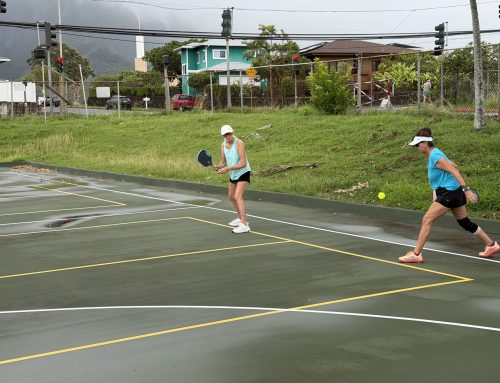
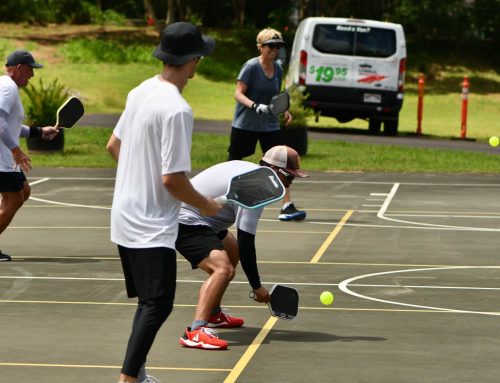
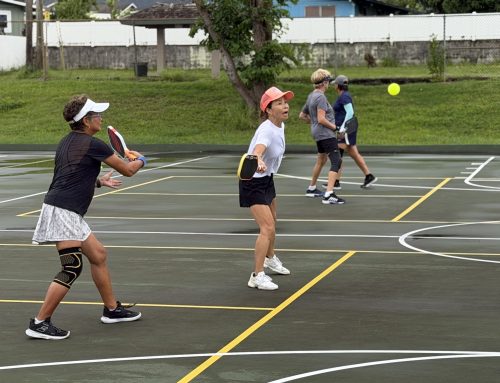
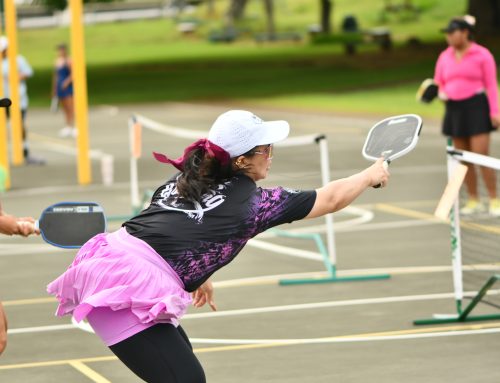
Open play is one of the easiest ways to get court time, meet other players, and experience different styles. You may face a banger, a patient dinker, a left-handed player, or someone who attacks every third shot. That variety is useful.
Before each session, pick one goal: deeper returns, better resets, fewer rushed speed-ups, or moving to the kitchen more efficiently. Judge the session on that goal instead of only the final score.
Use our current Oʻahu open-play guide for locations and schedule information. Those listings are maintained separately because public open-play times can change.
2. Find Reliable Practice Partners
A regular partner is one of the most valuable things you can have. You can drill for 20 minutes before playing games, repeat the same shot, and agree to work on specific patterns instead of simply competing.
If you have three or four players at a similar level, you can rotate through drills, skinny singles, controlled point starts, and doubles situations.
Hawaii Pickleball also created Pickle Partner Up™ as another way to connect players and arrange higher-quality scheduled games. Check the current page for availability and how the program is operating now.
3. Use Lessons & Clinics for Feedback
Private lessons are useful when you want someone to focus entirely on your game. Group clinics are useful when you want coaching plus multiple players for live drills and doubles situations.
A coach should help you answer three questions:
- What is actually causing the problem?
- What should I change?
- How do I practice the change until it becomes repeatable?
Current Hawaii Pickleball Academy® options include private lessons, small-group lessons, and monthly clinics. Our current monthly clinic page lists 90-minute sessions starting around $60, with groups organized by level.
4. Practice Against a Wall
A wall gives you free repetitions when you do not have a partner. It works best for compact skills: volleys, blocks, quick hands, paddle control, and shorter groundstroke patterns.
The Ala Moana Tennis Center still has a practice-wall area. Current Oahu Pickleball Association sessions also use that wall area for up to three pickleball courts on certain evenings, so do not assume the wall will always be open for solo practice.
Start close with soft touches and volleys. Once your control improves, move farther back and work on drives or faster exchanges.
5. Use a Pickleball Machine for Repetition
A ball machine can be useful if you want the same feed repeatedly. That makes it easier to isolate a contact point, practice footwork, or work on a shot without depending on a partner.
The weakness of a machine is that the ball is predictable. Real players disguise direction, change speed, and force decisions. Use a machine to build the movement, then test that movement against a person.
A Practical Weekly Improvement Plan
You do not need to train every day. The key is giving each session a purpose.
What Usually Slows Improvement?
- Playing games every day but never drilling.
- Trying to improve five different shots at the same time.
- Practicing a movement incorrectly for hundreds of repetitions.
- Only playing with the same people and never seeing new styles.
- Taking lessons but never practicing between them.
- Judging every session only by wins and losses.
Final Thoughts
The fastest improvement usually comes from a simple cycle: identify a weakness, drill it, test it in live play, then adjust based on what happened.
Open play, practice partners, walls, machines, clinics, and private lessons are all useful. None of them needs to do everything.
Need Help Identifying What to Work On?
Hawaii Pickleball Academy® offers private lessons, group training, and clinics around Oʻahu. Once we identify the problem, we can give you a clear way to practice it between sessions.
Explore Training Options