Finding Your Sweet Spot
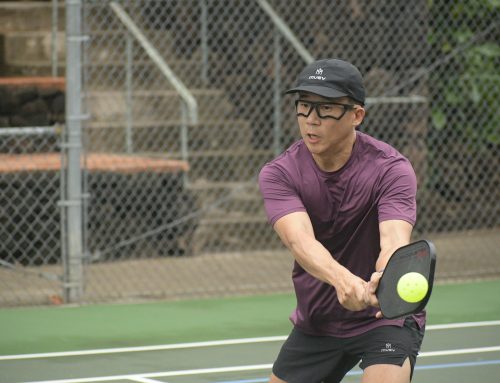
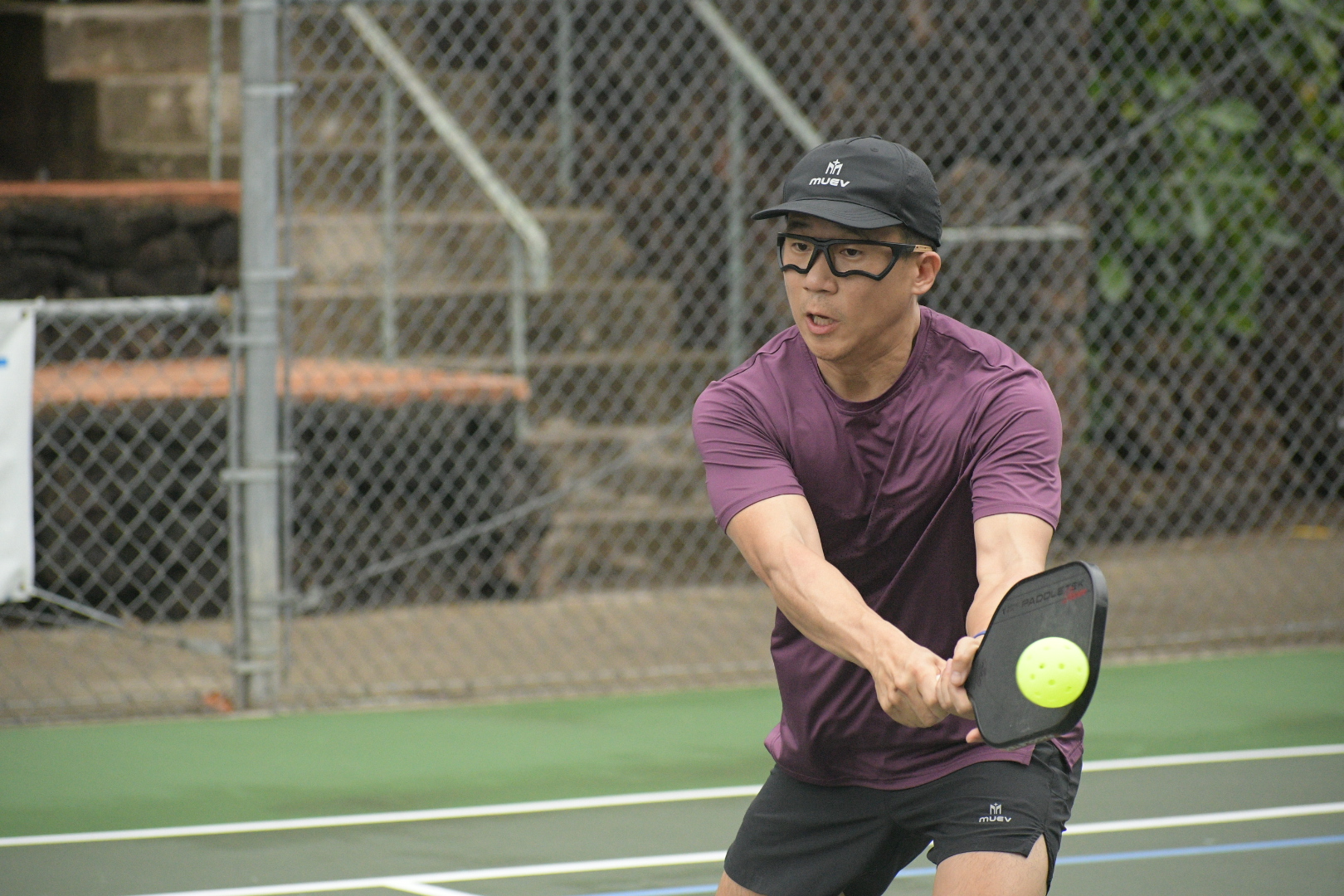
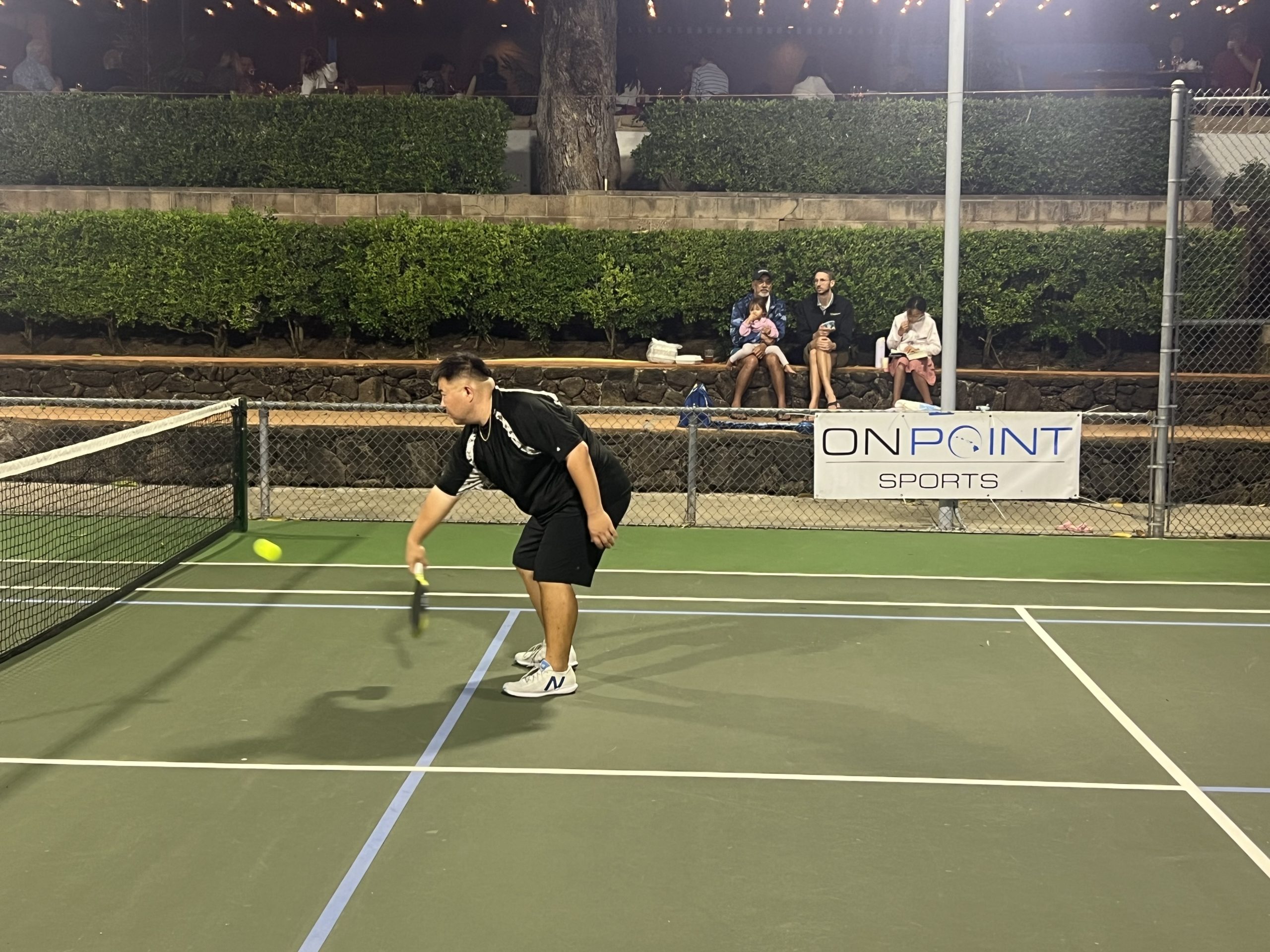
The best place to hit the ball is slightly in front of your hips.
This is your sweet spot—the ideal contact point for every forehand.
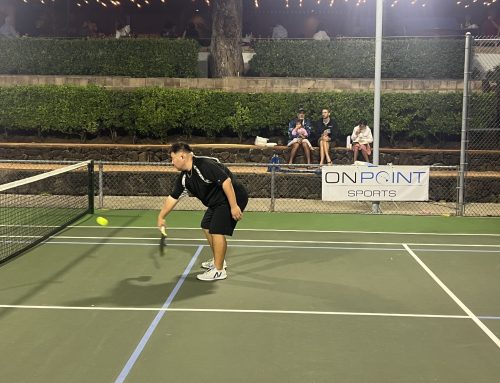
Sometimes the ball bounces lower. When that happens, bend your knees instead of reaching down with your arm. Bending your knees keeps your sweet spot in the same place near your hips, helping you stay balanced and hit a stronger shot.
Hitting the ball in your sweet spot leads to harder, cleaner, and more consistent forehands.
How to Position Your Feet (Right-Handed Players)
For right-handed pickleball players, your left foot should be in front and your right foot should be slightly behind.
Your toes should point slightly forward, not straight to the side.
This stance helps you step into the ball, stay balanced, and generate more power on your forehand.
TIP:
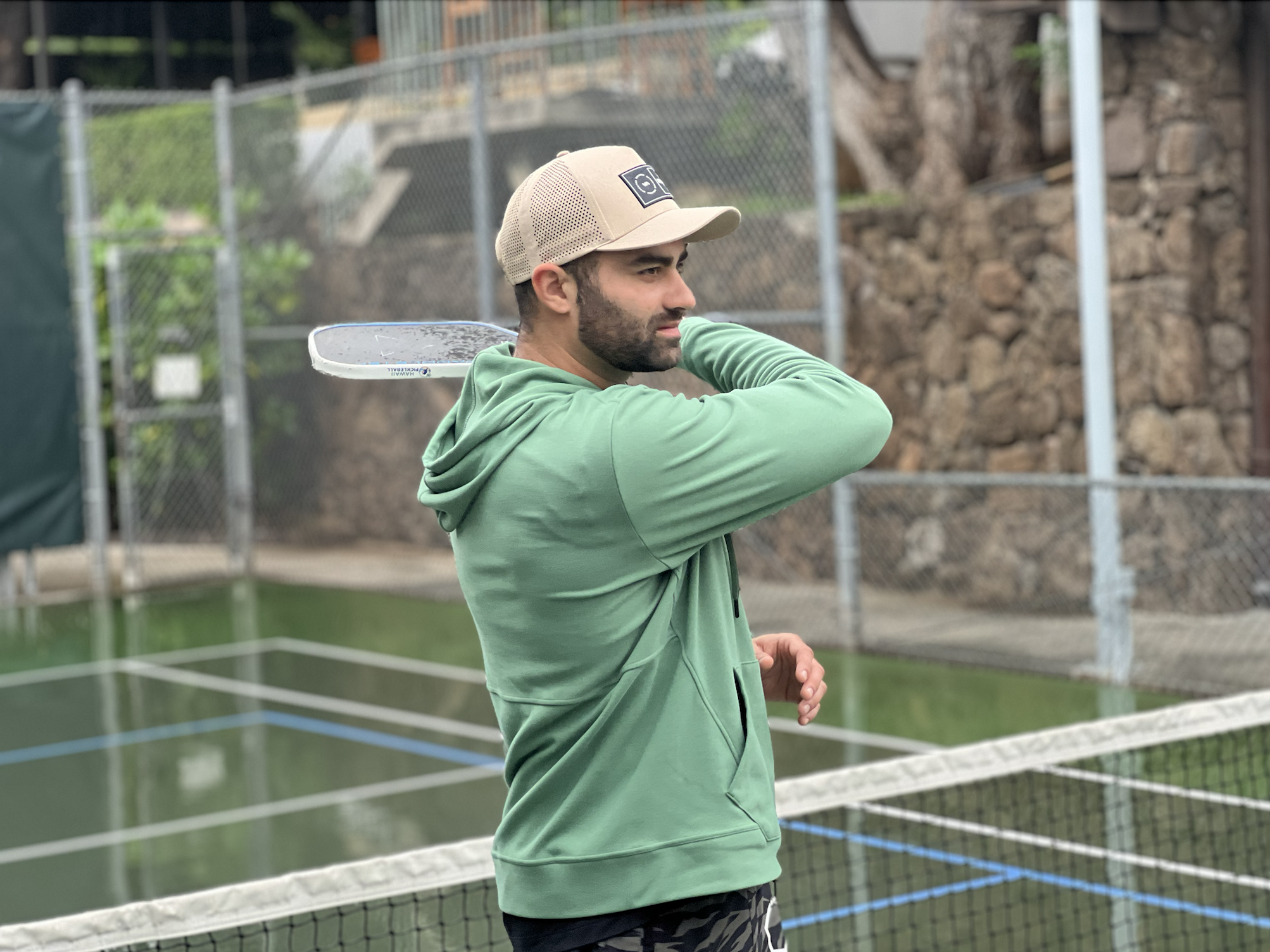
Make sure your fingernails are facing down during the swing—this helps create topspin when you hit the ball in your sweet spot. If the ball is going into the net, bend your knees more. If you need more height, lift your body as you swing to help the ball travel higher over the net.
If you’re still making mistakes, slow down and hit at about 50% power until your timing and control improve.
Shoulder Rotation
Using shoulder rotation during the forehand swing generates a significant amount of power, but it also helps the player stay relaxed while hitting the ball. When you rotate your shoulders, your body does more of the work instead of just your arm.
This simple yet powerful movement has a huge impact on your pickleball forehand power. Shoulder rotation makes it easier to control how much power is transferred into the ball, leading to smoother swings, better balance, and more consistent forehands.
Walking Through the Forehand Shot
After learning how to hit a proper pickleball forehand, it’s time to start adding more power to the stroke. One of the easiest and most effective ways to do this is by walking through the shot. When you walk through your forehand and time it correctly, the power transferred into the ball increases significantly.
The good news is that this works for players of all ages. If you can walk onto the court, you can use this technique. Walking through the forehand doesn’t require strength or speed—just good timing and balance.
Walking through the forehand is as simple as walking toward the net to pick up a ball. The only difference is that you need to time your steps with your swing. As you move forward, you make contact with the ball at your sweet spot, allowing your body weight to flow naturally into the shot.
The main difference between simply swinging a forehand and walking through a forehand is the step forward. This step helps you stay balanced, improves timing, and allows every player to generate more power in their own natural way.
TIP:
Time your steps so your feet are in the proper position at contact. Being in the right spot at the right time allows your forehand swing to work at its best.
Wrist Snap
Hitting hard is not only about having a good swing—it’s also about how the ball is struck. Adding a wrist snap at contact can generate a lot of power when the stroke is executed correctly. However, this is also the most difficult technique to learn because many players are not used to moving their wrist this way.
Imagine holding a hammer and hitting a nail. You snap your wrist to create power. On a pickleball forehand, the wrist snap is different—it moves more side to side with a slight upward motion, similar to turning a door knob while the paddle moves forward.
How to Execute the Wrist Snap
- Relax your wrist—do not hold it stiff
- Start with the bottom of the paddle facing forward
- As your swing moves forward, the tip of the paddle accelerates
- At your sweet spot, the “door-knob” motion happens naturally
- Finish the swing above your shoulder, across your body, as mentioned earlier2
When done correctly, wrist snap adds paddle-head speed, topspin, and controlled power without forcing the swing.
Hitting the Ball on the Rise
Now that you’ve learned all the ways to maximize power in your pickleball forehand swing, it’s time to add one more advanced skill: hitting the ball on the rise.
When you hit the ball on the rise—right after it bounces—the ball has the most energy available for your swing. Because the ball is still moving upward, you can use that energy instead of creating all the power yourself. This allows you to hit the ball faster and with less effort.
By timing your swing correctly and making contact at your sweet spot, you can capture the ball’s momentum and drive the ball the way you’ve always wanted.