
Pickleball Volleys & Two-Handed Backhand Drills
This clinic focused on three connected skills: controlling volley angles, changing from offense to a soft reset, and building a more repeatable two-handed backhand.
Updated September 2026
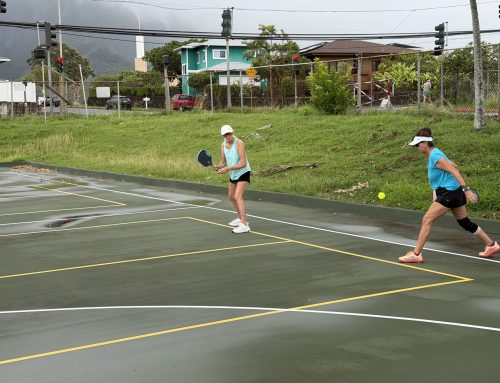
We had 29 players across Advanced, Intermediate, and Beginner groups. Because rain moved us indoors, the ball skidded more than it does on a normal outdoor court, so we had to adjust the drills around control rather than trying to force the same pace.
Volley Control: Paddle in Front
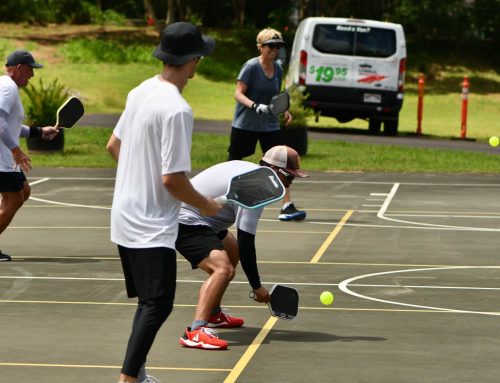
For forehand and backhand volleys, the biggest cue was keeping the paddle in front of the body. Players who swung too big often lost control of the angle and depth.

Sharp-Angle Volley Followed by a Reset
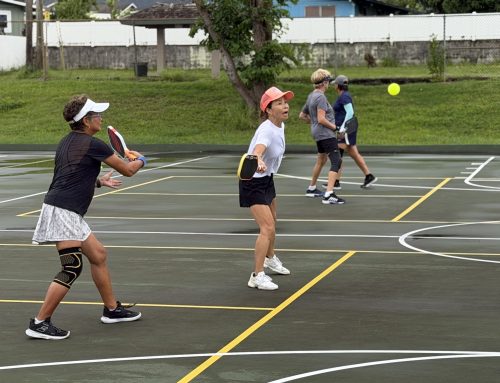
One drill forced players to switch immediately between offense and control. The first player attacked a sharp angle. The other side then tried to reset softly into the kitchen.
That sequence is useful because real points do not stay in one speed forever. You may attack one ball and need soft hands on the very next shot.
Opening the Court With Angles
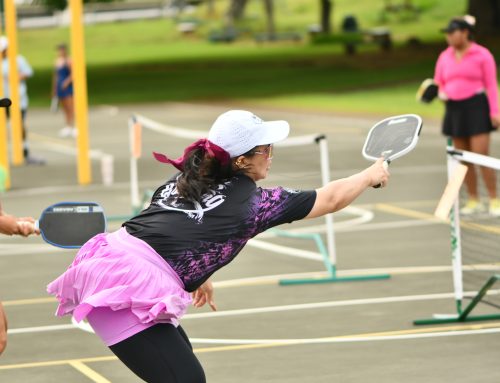
We also worked on returns and volleys that created space for the next shot. The idea was not to chase a winner immediately. It was to move one opponent far enough that a poach or sharp angle became available next.
Players learned that a slightly slower shot to the right target can be more useful than a harder shot directly into the opponent's strongest position.
Third-Shot Drop Under Fast Conditions
The indoor surface made the ball arrive quickly. Instead of taking a large swing, players practiced putting the paddle into the ball's path and redirecting the energy into a controlled drop.
This is a good lesson even outdoors: the faster the incoming ball, the less extra swing you often need.

Intermediate Group: Two-Handed Backhand
The Intermediate group spent significant time on two-handed backhand mechanics: grip, paddle angle, spacing, and moving smoothly through the ball.
The biggest value came from repetition. Instead of hitting a few backhands inside normal games, players hit the shot again and again from different feeds and angles.

Key Takeaways
- Angles often create more pressure than simply swinging harder.
- Keep the paddle in front on fast volleys.
- Be able to switch from attack to reset immediately.
- Use the incoming ball's pace when practicing third-shot drops.
- A two-handed backhand improves fastest when you get enough repetitions to feel the same contact repeatedly.
Join a Monthly Clinic
Hawaii Pickleball Academy® currently offers level-based 90-minute clinics around Oʻahu, with sessions starting around $60.
View Current Clinics