
How to Choose the Right Pickleball Partner (Complete Guide for All Skill Levels)
Finding the right pickleball partner can completely change your tournament results — and your enjoyment of the game. A great partner brings out your strengths, covers your weaknesses, communicates clearly, and shares the same goals. A bad partner, on the other hand, creates stress, confusion, and inconsistent play.
Whether you’re competing in your first tournament in Hawaii or preparing for a big event like the Hawaii Pickleball Open, choosing the right partner is one of the most important decisions you’ll make.
1. Character First: Find a Partner Whose Goals Match Yours
Most players choose partners based only on DUPR or rating. However, in Hawaiʻi, many players’ rankings don’t truly reflect their actual skill level. Some players have a low DUPR but can compete at a very high level. That’s why the real key to choosing the right tournament partner isn’t just skill — it’s character.
If you’re not trying to become a pro and simply enjoy playing local tournaments, you want a partner who is kind, positive, and fun to play with — not someone who will bend the rules or cheat just to win.
Before committing to a partner, ask yourself:
- Do we both want to compete, or are we just hoping for fun matches?
- Are we both committed to drilling and improving before the tournament, or do we just want to show up and play?
- Can we both play at the same pace — energy, focus, and competitiveness?
Getting clear answers to these questions will help you understand their goals and what they’re really looking for. The most challenging part of choosing the right pickleball partner is evaluating their character — and the truth is, you often won’t fully know until you play with them.
The best way to find a partner with the right attitude is to pay attention before you team up. Watch how they behave during games, how they handle mistakes, and how they treat others. Observing someone ahead of time can tell you far more than a DUPR rating ever will.
Why goals matter choosing the right pickleball parter
Two 3.5 players can have completely different expectations:
- One wants medals.
- One wants social games.
- One wants to learn and doesn’t care about the score.
If your goals don’t match, problems show up fast. You need to be clear about the ultimate goal: Are you trying to win a medal? Are you looking for competition? Or are you just playing for fun?
Some players are willing to sandbag and play below their true level so they can win more easily. If both you and your partner agree on that approach, then you’re aligned. But if you want to play at your true level while your partner wants to play down, that’s a major mismatch. Deep down, you’ll feel out of place competing below your ability, and it will lead to frustration. In that situation, it’s better not to team up because your motivations are different from the start.
How do you fix this—and do you actually want to make it work?
Before agreeing to partner, ask each other:
“What do you want out of this partnership for this tournament?”
Clear goals create clear expectations, which lead to better teamwork.
For example, if I know a player consistently makes bad line calls or is difficult to play with, I’m not going to force it. Instead, I’ll simply say, “Thank you for asking me to be your pickleball partner for the upcoming tournament in Hawaiʻi, but I’m going to pass.”
Being honest early saves both players from a frustrating experience later.
2. Choose a Compatible Play style
Just like in most sports, the best pickleball teams are usually the ones where both players complement each other’s skill sets. It’s not always a bad thing if both players have a similar style of play, but having two players with different styles can actually make your team stronger. Each player brings their own strengths and weaknesses, which makes it much harder for the opposing team to find something to exploit.
Here are the 4 major playstyle factors you should consider:
A. Aggressive vs. Patient
If you’re an aggressive player who loves speeding up, you need a partner who:
-
Can reset when things don’t go as planned after your “amazing” speed-up.
-
Knows how to cover open spaces and slow the point back down.
-
Doesn’t panic when the tempo rises and feels comfortable playing at different paces.
If both partners are aggressive with little control, the game becomes very fast and unpredictable. You may not always know where the ball is going, but you can guarantee it’s getting there fast.
On the other hand, if both partners are overly passive and great at resetting points, it can be challenging for opponents to hit clean winners. But if they can’t put the brakes on aggressive players or apply pressure, they risk getting overrun.
B. Forehand vs. Backhand Strength
Many great teams follow this rule:
- Stronger forehand in the middle
- Stronger backhand on the sideline
However, when you play with a lefty and you’re a right-handed player, you might end up with two forehands in the middle—or two backhands—depending on your positioning. This is where communication between partners becomes key. You both need to decide who has the stronger middle-court game and who should take those balls.
You want to make sure that the stronger player in the middle is the one who can punish opportunities that come down the center of the court.
Why should the stronger player take the middle in pickleball?
-
Middle balls are high-percentage
-
The forehand controls more space
-
It reduces confusion on “who takes what”
If you’re the stronger forehand, you should normally play the left side (for right-handed players). But if you’re a lefty with the stronger forehand, you should be playing the right side.
Who has the stronger backhand dinks?
When it comes to exposing an opponent’s weaknesses, many players like to push balls toward the backhand, because most people struggle more under backhand pressure. If your partner has stronger backhand dinks, it might actually be better not to put their backhand in the middle. Instead, keeping their backhand on the outside can help them defend their side more easily and stay comfortable in those patterns.
C. Soft Game vs. Fast Game
What kind of game is best for your team — a soft game or a fast game? Which style actually brings out your strengths? Ask yourself what you enjoy more: staying in the rally longer and working the point… or feeling the rush of fast, unpredictable hands battles?
Soft-game specialists love:
- Dinks
- Resets
- Third-shot drops
- Long rally patience
Fast-game players love:
- Drives
- Speed-ups
- Poaching
- Punch volleys
And the best teams have both:
- The soft-game player sets the table
- The fast-game player finishes the point
D. Footwork & Court Movement
When choosing the right pickleball partner, you need to consider how effectively the two of you can cover the court together. If one player is very fast and the other is slightly slower, you can still cover the whole court with ease. But if both players are slow, it takes much more strategy and anticipation to avoid leaving open spaces.
Benefits of having a fast pickleball partner:
- Foot speed — they can close gaps quickly.
- Great recovery ability — they get back into position after tough shots.
- Willingness to move — they chase lobs, run down drops, and help take pressure off you.
A fast partner can make the whole team feel lighter, quicker, and more confident on defense and transition.
3. Communication: The Biggest Factor Most Players Ignore
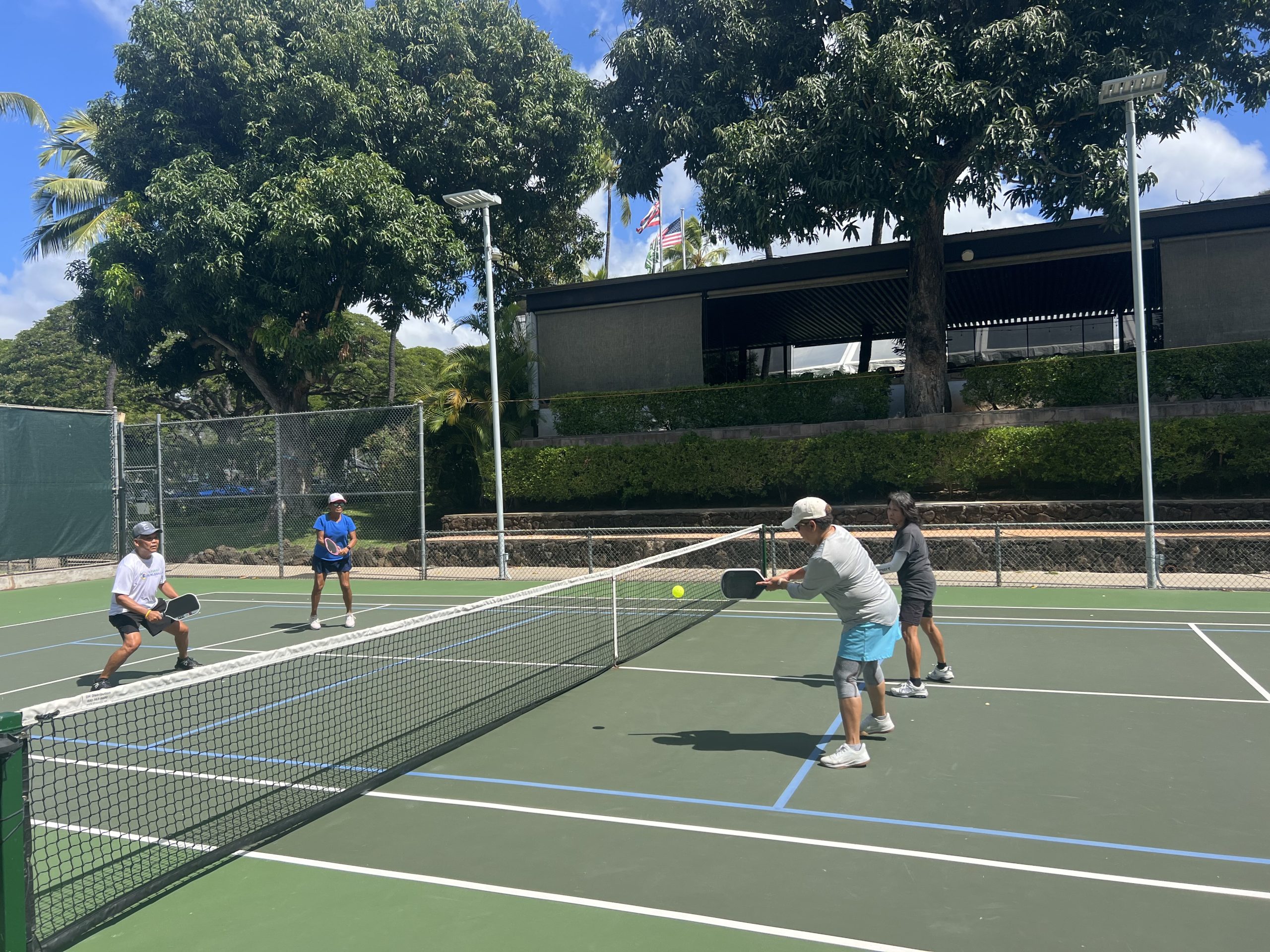
You might think the best pickleball partner is simply the one with the highest skill level — but that’s not always true. The level of play isn’t the biggest factor in how good a partner is. Communication is what makes a team better or worse.
When you have clear communication on the court, your team starts to run like a well-oiled machine, with each player knowing their role and adjusting naturally to each situation. Great teamwork always beats great individual skill.
The best partner is often the one who communicates clearly.
Here’s what you should hear during points:
- “Yours!”
- “Mine!”
- “Switch!”
- “Out!”
4. Skill Level Gap: How Far Apart Can You Be?
Tournament data across the U.S. shows that the ideal skill gap between partners is 0.25 to 0.50. This means if you’re a 4.0 player, teaming up with a 4.25 or 4.5 can still work because you’ll be able to keep up with the pace and level of play. But if you’re a 4.0 trying to partner with a 5.0, the gap is usually too big and becomes hard to manage.
Examples:
- 3.0 + 3.25 = acceptable
- 3.5 + 3.75 = good match
- 4.0 + 4.5 = big gap → usually tough
- 3.0 + 4.0 = rarely works well
Keep in mind that you’re the only one who can truly decide whether the matches feel like too much for you. And sometimes, the best way to grow is to play against tougher teams and learn those lessons firsthand.
5. Red Flags: Pickleball Partners You Should Avoid
The pickleball partners you should avoid in doubles often share a few similar traits:
- Flat or negative attitude
- Blaming you for losing
- Cheating or making dishonest calls
- Needing to win at any cost
- Not willing to communicate
These traits make the game stressful, unpredictable, and—most importantly—not fun. A good partner lifts you up, not drags you down..
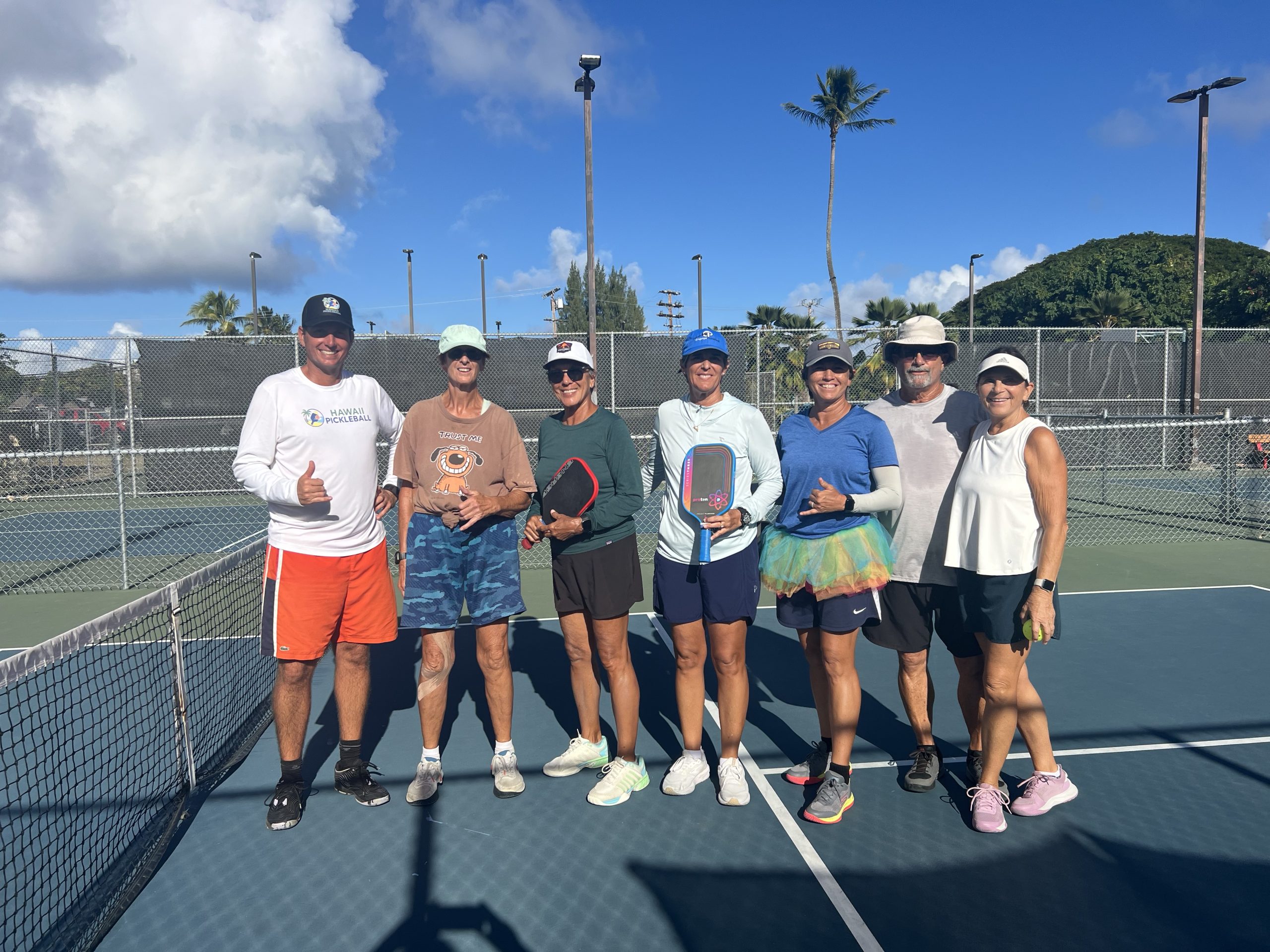
6. Where to Find Pickleball Partners (Especially in Hawaiʻi)
If you want to play tournaments or sharpen your skills, here are the best ways to find a partner. This doesn’t apply only to Hawaiʻi — it works anywhere in the world where people are playing pickleball.
• Local open plays (Fort DeRussy, Diamond Head, Mahiko Park)
Meet partners through consistent play and get to know how people interact with others on the court.
• Join local leagues & clinics
Players often meet their best partners in structured settings, which is great. Leagues give you real match experience, and drills let you practice with different players to see how they perform and how well your styles match.
• Pickle Partner Up™
Perfect for visitors or locals looking for strong partners for training or competitive games. In Hawaiʻi, you can hire an experienced pickleball player to partner with you during your stay in Honolulu, whether you want focused practice or high-level match play.
Conclusion: Choose Pickleball Partners Who Make You Better — On and Off the Court
Choosing the right pickleball partner isn’t just about DUPR, power, or who hits the hardest. It’s about fit — matching goals, compatible playstyles, clear communication, and teamwork that feels effortless. The right partner elevates your strengths, supports your weaknesses, and makes every match more enjoyable. The wrong partner creates stress, confusion, and missed opportunities.
When you pay attention to character, communication, and how your styles blend, you put yourself in the best position to succeed — whether you’re playing local events, league matches, or preparing for a major tournament like the Hawaii Pickleball Open.
At the end of the day, the best partner is someone who:
- Shares your goals
- Lifts your energy
- Plays a style that complements yours
- Communicates clearly
- Makes the game fun
Pickleball is a partnership sport. When you choose wisely, everything gets easier — your resets feel smoother, your attacks feel sharper, and your confidence rises with every point.
So take your time, observe players, try different partners, and trust your instincts. The right teammate isn’t just someone who helps you win… it’s someone who makes you want to keep playing.
If you’re in Hawaiʻi and want help finding the perfect partner — whether for training, open play, or tournaments — you can always explore Pickle Partner Up™ and connect with experienced players ready to help you level up.
Choose smart, play confidently, and enjoy the journey.