
Clinic Recap: Blocking Bangers and Moving Smarter in Pickleball
Fast drives are much easier to handle when you stop trying to out-swing them. This clinic focused on using a stable paddle, simple angles, soft hands, and efficient movement so players could block pace without feeling rushed.
Updated September 2026
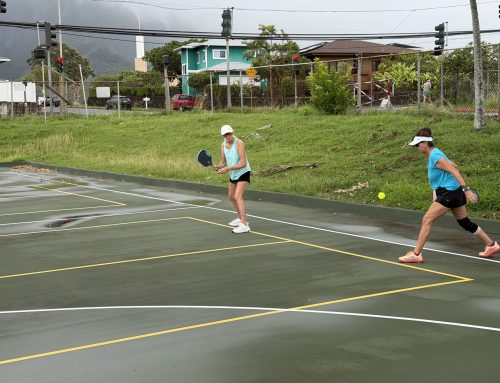
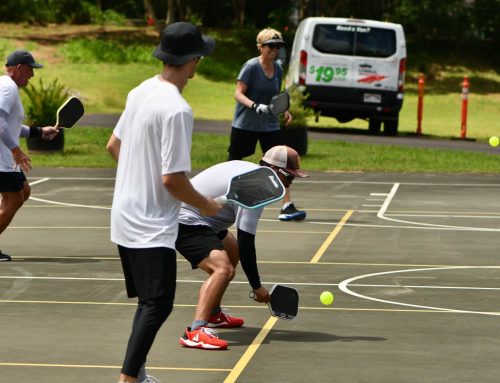
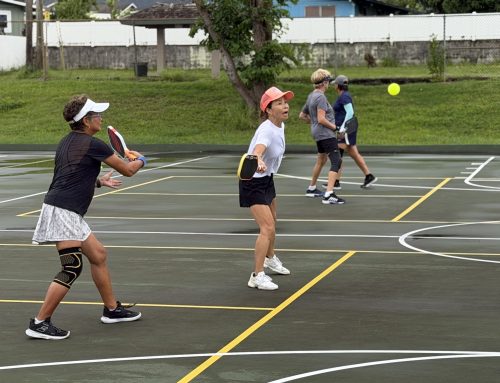
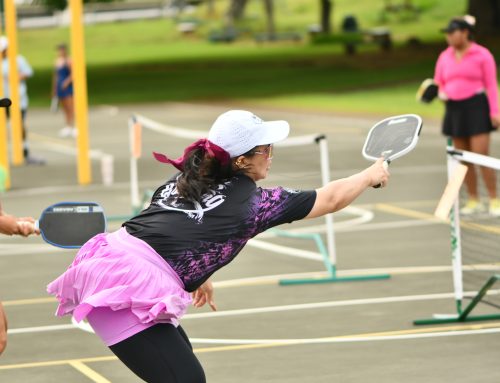
This recap comes from one of our Intermediate+ / Advanced Hawaii Pickleball Academy® clinics. We had eight players and focused on two connected skills: blocking fast drives and moving efficiently enough to be balanced before contact.
The main idea was simple: when the ball is already traveling fast, you do not need a big swing. Your job is to get the paddle into the right position, control the face, and redirect the pace.
Blocking Fast Balls on the Forehand
Keep the Elbow in Front of the Body
When the elbow stays slightly in front of your torso, the paddle is easier to position in the path of the ball. Think about catching a ball rather than swinging at it. You place your hand where the ball is going and let the contact happen in front of you.
The same concept applies to a forehand block. Set the paddle early, keep the movement compact, and let the incoming speed provide much of the energy.
Paddle Angle Controls the Result
Your paddle face determines whether the blocked ball stays low, floats high, or gets driven into the net.
- If contact is comfortably above net height, the paddle face can be more neutral or slightly closed depending on the incoming ball.
- If the ball is lower, you usually need a slightly more open face to give it enough height to clear the net.
- The faster the incoming ball, the less extra swing you generally need.
Grip affects the paddle face too. A Continental-style grip is common for quick volleys because it lets players move between forehand and backhand without making a large grip change.
Blocking Fast Balls on the Backhand
The same principle applies on the backhand: put the paddle where the ball is going and avoid turning the block into a full groundstroke.
One-Handed Backhand
Use a compact movement and stable paddle face. If you can meet the ball in front of your body, the incoming pace can do most of the work.
Two-Handed Backhand
With two hands on the paddle, the non-dominant hand can provide additional stability. Keep both hands relaxed enough to absorb speed instead of making the paddle rigid.
A two-handed block can also be useful for developing transition-zone resets because the extra support can make it easier to soften a fast ball.
Moving Smarter When You Do Not Want to Over-Move
Later in the clinic, we worked on efficient movement for players who do not want to rely on constant hopping or aggressive lateral shuffling. That can be especially useful for players who prefer a more controlled movement style.
The goal is not to move less at all costs. The goal is to use the right amount of movement so you can arrive balanced before the opponent's ball reaches you.
For example, if you are pulled wide to the backhand side, you may need a crossover step to recover toward the middle. The important part is regaining balance after the larger step instead of continuing to drift when the next ball arrives.
Three Drills to Practice Blocking Bangers
Key Takeaways From the Clinic
- Against fast drives, less swing is usually better.
- Keep contact in front whenever possible.
- The paddle angle changes depending on ball height and the direction you want.
- Relax the hands enough to absorb pace.
- A two-handed backhand can add stability, but a one-handed block remains useful for quick reactions.
- Efficient footwork matters because the best blocking technique will not help much if you arrive late and off balance.
- Do not judge a block by how hard you hit it. Judge it by whether you stayed in control of the next ball.
Why Blocking Matters More as the Level Goes Up
As players get better, drives and speed-ups come back faster. Trying to beat every fast ball with another hard swing can create a cycle where you have less and less time.
A good block changes that. You can neutralize the first attack, redirect the ball to a better location, and sometimes force the opponent to create pace again from a less comfortable position.
For the broader strategy, read our full guide on how to beat bangers in pickleball and our article on how to gain time and control the rally.
Want to Work on This in a Clinic?
Hawaii Pickleball Academy® runs structured monthly clinics around Oʻahu. Current clinic sessions are generally 90 minutes and start around $60, with groups organized by level.
View Current Pickleball Clinics