Health Benefits of Pickleball for Healthy Aging
Most people start playing pickleball because it looks fun. Maybe their friends invite them, they want to try a new sport, or they are simply looking for another way to exercise.
However, pickleball can become much more than a hobby.
It can help you move more, improve your cardiovascular fitness, spend time with friends, challenge your brain, and give you something positive to look forward to each week. When you combine all of these benefits, pickleball can become an important part of a healthier and possibly longer life.
Of course, pickleball cannot guarantee that anyone will live longer. Your health is affected by genetics, nutrition, sleep, stress, medical care, and many other factors.
But staying active, socially connected, mentally challenged, and happy is important at every age. Pickleball brings all of those things together in one activity.
That is why I believe pickleball can be so valuable.
Pickleball Keeps Your Body Moving
One of the most important things we can do as we get older is to keep moving.
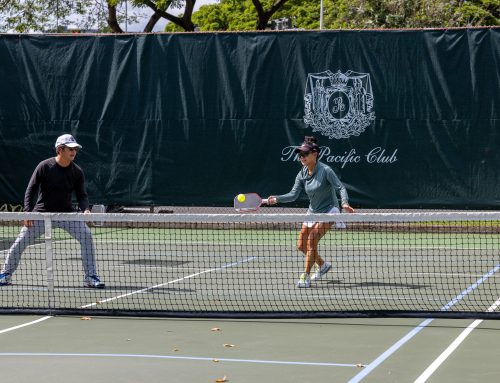
Pickleball requires you to walk, shuffle, bend, reach, rotate, balance, and react. You may not even realize how much movement you are getting because you are focused on the ball and enjoying the game.
During one rally, you might move forward to reach a dink, step sideways to cover the middle, rotate to hit a return, and then quickly prepare for the next shot.
These are movements that help keep your legs, core, shoulders, arms, and entire body active.
Many people do not enjoy going to the gym or walking on a treadmill. They know exercise is important, but it can feel repetitive and boring.
Pickleball is different.
You are not only exercising. You are playing, competing, learning, laughing, and spending time with other people. Because it is enjoyable, you are more likely to continue doing it.
The best exercise is often the exercise you actually want to do consistently.
Pickleball Supports Cardiovascular Health
Pickleball can also help your heart and cardiovascular system.
When you play, your heart rate increases as you move around the court. Some rallies are slower, while others include quick movements, fast reactions, and short bursts of higher intensity.
How much cardiovascular exercise you receive depends on your level, how long you play, and how much of the court you cover. However, even recreational doubles can help you spend more time on your feet and less time sitting.
As your conditioning improves, you may notice that you can play longer, recover faster between points, and feel more comfortable during longer rallies.
Pickleball should not be your only form of exercise. Strength training, walking, stretching, balance work, and proper recovery are also important.
However, pickleball can become a major part of an active lifestyle because it gives you a reason to keep coming back.
Pickleball Helps You Stay Socially Connected
Your physical health is important, but your relationships and social life are important too.
Pickleball naturally brings people together. You need other people to play, especially in doubles. You communicate with your partner, meet new opponents, and often spend time talking before and after the game.
Many people begin playing with strangers and eventually become part of a regular group.
They start attending open plays together, taking lessons, entering tournaments, traveling, or meeting outside of pickleball.
This social connection can become especially important later in life. Retirement, relocation, medical conditions, or family changes can sometimes make it harder to maintain regular friendships.
Pickleball gives people a reason to leave the house and be around others.
Sometimes the conversations and friendships you build at the court are just as important as the actual exercise.
Having Fun Is Also Important
People sometimes focus so much on exercise that they forget how important it is to enjoy life.
Pickleball gives you a chance to laugh, compete, celebrate a great point, and forget about everyday problems for a while.
Even if you lose, you can still walk away with a good memory, a lesson, or motivation to improve the next time.
Having a game, clinic, or lesson scheduled can also give you something positive to look forward to during the week.
You are not exercising only because someone told you that you should.
You are exercising because you want to see your friends, improve your game, and have a good time.
That enjoyment is what helps many people stay consistent.
Outdoor Pickleball Gets You Outside
Here in Hawaiʻi, we are fortunate to have opportunities to play outside throughout most of the year.
Outdoor pickleball gets you away from your phone, computer, television, and indoor routine. You can enjoy fresh air, natural light, and the environment around you.
Sun exposure can also help your body produce vitamin D, which is important for your bones and overall health.
However, that does not mean you should stay in the sun for hours without protection.
Outdoor players should drink enough water, wear sunscreen, use a hat or protective clothing, and take breaks when the heat becomes too strong.
Vitamin D levels are different for every person, and outdoor pickleball should never replace advice from your doctor.
The larger benefit is that pickleball encourages you to get outside, move your body, and experience your surroundings instead of spending the entire day sitting indoors.
Pickleball Challenges Your Brain
Pickleball is not only a physical game. It is also a thinking game.
Where should you serve? Should you drive the third shot or hit a drop? Should you attack the ball or remain patient? Where is the open space? What is your opponent likely to do next?
You must track the ball, remember the score, read your opponents, communicate with your partner, and make decisions quickly.
You are also constantly learning something new.
At first, you may be learning how to make contact with the ball. Later, you may focus on your serve, return, dinks, drops, volleys, positioning, or strategy.
There is always another skill to develop.
Pickleball cannot guarantee that you will prevent memory loss, Alzheimer’s disease, or dementia. However, it does give your brain opportunities to learn, react, solve problems, and adjust.
That mental challenge is valuable at every age.
Pickleball Gives You New Goals
A healthy life should not only be comfortable. We also need goals and challenges.
Pickleball provides many opportunities to improve.
First, your goal may be to keep the ball in play. Then you want to serve deeper, control your returns, reach the kitchen more effectively, and become more consistent with your dinks.
Later, you may decide to attend a clinic, join open play, participate in a tournament, or move into a higher-level group.
The goal does not always need to be winning.
Sometimes the biggest victory is moving better, becoming more confident, or doing something you could not do a few months earlier.
Those small improvements can give people a strong sense of purpose.
Pickleball Can Help You Maintain Independence
As we age, strength, mobility, balance, coordination, and confidence become increasingly important.
These abilities help us complete everyday activities, such as walking, carrying groceries, getting out of a chair, using stairs, or moving safely around the house.
Pickleball challenges many of these abilities.
You need to stay balanced while reaching for the ball. You must coordinate your eyes, hands, feet, and paddle. After every shot, you need to recover and prepare for the next one.
Of course, pickleball should be played safely.
Proper court shoes, hydration, warm-ups, recovery, strength training, and safe movement techniques all matter. New players should gradually increase their playing time instead of immediately trying to play for several hours.
Anyone with a medical condition, recent injury, balance problem, or long period of inactivity should speak with a qualified healthcare professional before starting.
Movement Still Matters When You Have a Medical Condition
One of the most inspiring parts of coaching is seeing people continue moving despite medical conditions, physical limitations, or major surgeries.
Some players are returning after a hip or knee replacement. Others may be living with arthritis, Parkinson’s disease, Alzheimer’s disease, another form of dementia, or a heart condition.
They may not move as quickly as they once did, and their version of pickleball may look different.
That does not mean the movement is unimportant.
The goal does not always need to be playing a full competitive game. Sometimes the goal is simply to keep the muscles working, improve coordination, move safely, and enjoy being around other people.
For one person, a good session may be several full games.
For another person, it may be standing near the kitchen and hitting controlled balls for 15 minutes.
Someone else may sit in a chair and work on catching, tapping, or directing the ball.
All of these activities can have value.
The important thing is to adjust the activity to the person instead of expecting every person to play the same way.
Pickleball and Alzheimer’s Disease or Dementia
For someone living with Alzheimer’s disease or another form of dementia, a familiar and closely supervised activity can provide movement, social interaction, coordination, and a positive routine.
The activity may need to be simplified.
Instead of explaining complicated rules or strategy, the coach or caregiver can focus on one simple task at a time.
That might include hitting the ball back after a controlled feed, catching the ball, tapping it over the net, or moving toward a clear target.
Sessions may include:
- Slower and more predictable ball feeds
- Short and simple instructions
- Frequent repetition
- A smaller playing area
- More breaks
- Help from a family member or caregiver
- A familiar routine each time
Physical activity does not cure Alzheimer’s disease or dementia.
However, moving the body, being around other people, and participating in an enjoyable routine can still be meaningful.
Safety and supervision are extremely important. The activity should always match the person’s current physical and cognitive abilities.
Pickleball and Parkinson’s Disease
At Hawaii Pickleball Academy®, I have worked with people living with Parkinson’s disease.
One of my main goals is to help them keep moving and continue using their muscles.
Parkinson’s disease can affect movement in different ways. A person may experience stiffness, slower movements, balance difficulties, or trouble starting and controlling a movement.
This means the session must be adjusted to the individual.
For some participants, I may stand close and feed the ball directly to a comfortable hitting area. We may focus on reaching, rotating, stepping toward the ball, and recovering after the shot.
Other participants may be able to move around a limited part of the court and play short, controlled rallies.
A modified session may include:
- Gentle warm-up movements
- Controlled ball feeds
- Reaching and rotating
- Short steps in different directions
- Balance and coordination activities
- Paddle-control exercises
- Short rallies
- Frequent rest and hydration breaks
The purpose is not always to win points or play a regular game.
Sometimes the purpose is to help the person use their arms, legs, core, and balance while focusing on something enjoyable.
The ball gives them a target. The paddle gives them a task. The session gives them a reason to move.
Pickleball can also help the participant focus on something beyond the medical condition. They can enjoy making contact with the ball, learning a skill, and celebrating small improvements.
Pickleball is not a cure for Parkinson’s disease and should never replace medical care, medication, physical therapy, or occupational therapy.
Every person experiences Parkinson’s differently. Anyone living with the condition should receive medical guidance before beginning a new activity, and some participants may need a caregiver or family member present.
The goal is to meet the person where they are.
Even gentle and controlled movement can be an important accomplishment.
Pickleball After Hip or Knee Replacement
Pickleball may also give people motivation after a hip or knee replacement.
After surgery and rehabilitation, many people want to return to activities that are social and enjoyable. Pickleball can become one of those goals.
However, returning should never be rushed.
A player should first receive clearance from a surgeon, physician, or physical therapist. Every surgery and recovery is different.
Pickleball includes bending, reaching, rotation, and changes of direction. A returning player may need to begin with:
- Gentle paddle work
- Controlled drills
- Limited court movement
- Short sessions
- Frequent breaks
- Doubles instead of singles
- No chasing difficult balls
A player might initially remain close to the kitchen and hit controlled balls instead of playing a complete game.
It is important to listen to the body and follow the advice of the medical and rehabilitation team. Players should not try to prove something by pushing through sharp pain.
The goal is to gradually rebuild confidence and movement, not to return too quickly and create another problem.
The Real Secret Is Consistency
One pickleball game will not completely change your health.
The real benefit comes from consistency.
You keep showing up because your friends are waiting for you. You want to improve your backhand. You enjoy the competition. You like being outside. You feel better after you play.
Pickleball may begin as something you try once, but it can become part of your weekly routine and lifestyle.
It keeps your body moving, your heart working, your mind learning, and your social circle growing.
Most importantly, it can make exercise feel enjoyable.
At Hawaii Pickleball Academy®, we believe pickleball is about much more than learning how to hit a ball.
It is about building confidence, creating relationships, challenging yourself, and finding a sport you can enjoy for many years.
You cannot control exactly how long you will live.
However, you can make choices that may help you remain active, connected, independent, and happy during the years ahead.
Pickleball is one very good place to start.
Frequently Asked Questions
Can Pickleball Help You Live Longer?
Pickleball cannot guarantee a longer life. However, it combines movement, cardiovascular activity, social connection, mental challenges, and enjoyment.
These are all important parts of a healthy and active lifestyle.
Is Pickleball Good Exercise for Older Adults?
Pickleball can be a very good activity for older adults because it includes walking, reaching, balance, coordination, rotation, and hand-eye coordination.
The activity can also be adjusted based on the player’s fitness and mobility.
Older adults should still include strength training, stretching, and balance work in their overall routine.
Is Pickleball a Cardiovascular Workout?
Pickleball can provide cardiovascular exercise because it increases your heart rate and keeps you moving.
The intensity depends on how long you play, how active the rallies are, and how much of the court you cover.
Is Pickleball Good for Your Brain?
Pickleball challenges the brain because players must track the ball, remember the score, make decisions, communicate, and learn new skills.
It should not be considered a guaranteed way to prevent dementia, but it can provide regular mental stimulation.
Can People With Parkinson’s Disease Play Pickleball?
Some people living with Parkinson’s disease may be able to participate in a modified pickleball activity.
The session may include controlled feeds, gentle movement, reaching, balance exercises, paddle skills, and short rallies.
The activity should be adjusted to the participant’s symptoms and abilities. Medical approval may be necessary, and some people may need a caregiver or family member present.
Can Someone With Alzheimer’s Disease or Dementia Play Pickleball?
Some people with Alzheimer’s disease or dementia may be able to participate in a simplified and supervised pickleball activity.
Instructions should be short, clear, and repeated when needed. The goal may be gentle movement and social interaction rather than playing a traditional game.
Can You Play Pickleball After a Hip or Knee Replacement?
Some people can return to pickleball after a hip or knee replacement, but they should first receive approval from their surgeon or physical therapist.
The return should be gradual and may begin with controlled drills, limited movement, and short sessions.
How Often Should You Play Pickleball?
The right amount depends on your age, fitness, health, playing intensity, and recovery.
New players should begin gradually. It is also important to include rest, strength training, flexibility, and other forms of movement.
What Is the Safest Way to Start Playing Pickleball?
A beginner lesson can help you learn safe movement, positioning, proper technique, and the basic rules.
Wear supportive court shoes, warm up before playing, drink enough water, and do not continue playing through sharp pain.
Anyone managing a medical condition or recovering from surgery should speak with a healthcare professional before beginning.
Start Your Pickleball Journey
Whether your goal is to improve your fitness, meet new people, learn a new skill, or simply have more fun, pickleball can become a valuable part of your life.
Hawaii Pickleball Academy® offers professional instruction for different ages, abilities, and experience levels in Hawaiʻi.
Our goal is not only to help people become better pickleball players.
We also want to help them move with confidence, understand the game, meet other people, and find an activity they can enjoy for many years.
Hawaii Pickleball Academy® is a federally registered trademark.
This article is for general educational purposes only and is not medical advice. Anyone recovering from surgery or managing a medical condition should consult a qualified healthcare professional before beginning or returning to pickleball.