Pickleball by the numbers — 2026
🇺🇸
United States
24.3M
players in 2025
+22.8% YoY
🌏
Asia (12 territories)
282M
monthly players (survey)
+60% YoY
🇨🇦
Canada
1.54M
players (Jan 2025)
+57% since 2022
🇦🇺
Australia
26,963
registered members
414 clubs
🏴󠁧󠁢󠁥󠁮󠁧󠁿
England
2,350
Open players in 2025
3,000+ target 2026
🌍
Global federation
77
IPF member countries
37 in Europe
Avg. player age (US)
34.8 yrs
US growth since 2020
+479%
US courts listed
18,548
Approved paddles
5,051
Sources: SFIA · Pickleball Canada · UPA Asia/YouGov · Pickleball Australia · Pickleball England · IPF · USA Pickleball · Pickleheads

For the past few years, pickleball has been easy to dismiss as a trend. A retirement community pastime gone viral. A social media moment. The sport that turned every empty tennis court into a source of noise complaints and confused city council meetings. The one your coworker wouldn't stop talking about after their first lesson.

That narrative is officially over.

In 2026, pickleball stopped being a boom and started being a business. A real one — with institutional capital, global tour infrastructure, formal governance, adaptive sport inclusion, and the kind of demographic depth that sustains a sport for generations. The noise complaints aren't going away, but they're now the sound of something much bigger than a fad.

This is a deep look at where pickleball stands in mid-2026: the participation numbers, the demographic shifts, the rule changes, the pro scene, the investment landscape, and what all of it means for the coaches, club owners, and players who are building their lives around this sport.


Part One: The Participation Story

The Headline Number Nobody Can Argue With

Let's start with the United States, because the data is the cleanest: 24.3 million Americans played pickleball in 2025, according to the Sports & Fitness Industry Association. That's up 22.8% year over year. Up 171.8% over three years. Up a staggering 479% since 2020.

US pickleball participation — 2020 to 2025
2025 players
24.3M
5-year growth
+479%
YoY growth
+22.8%
3-year growth
+171.8%
Players (millions) Growth trend
Source: SFIA. 2021 and 2023 are interpolated estimates. Values in millions of players.

Read that last number again. Nearly five times as many Americans playing pickleball as did just five years ago. For context, that's more Americans than play tennis, golf, or volleyball. Pickleball isn't niche anymore. It isn't "emerging." It is mass-market, and it has been for a couple of years now.

But here's what makes 2026 different from the years before it: the U.S. isn't even the most interesting part of the story anymore.

Canada: The Cleanest Growth Story Outside the U.S.

Canada has become one of the most transparent and well-documented pickleball markets in the world. Pickleball Canada's January 2025 national survey put participation at 1.54 million players — a 57% increase since 2022, and a 15% jump just from 2024. National membership passed 90,000 in November 2025. The biggest driver? Adults ages 35–54 — not retirees, not teenagers.

Europe: Building Without a Single Big Number

The European Pickleball Federation now counts 37 member countries. France received official delegation status through the FFT in January 2026 and will host its first national championships in July 2026. England's Open grew from 1,976 players in 2024 to 2,350 in 2025, targeting 3,000+ registrations in 2026.

Asia: The Giant in the Room

A 2025 UPA Asia/YouGov study estimated 282 million monthly active players across 12 territories, with ~60% year-over-year growth. Japan's two leading bodies merged into Pickleball Japan in April 2026. PPA Tour Asia has a 10-stop 2026 calendar. The Hong Kong Slam has up to $1.1 million in prize money.

Australia: The Organized Market

Pickleball Australia's official numbers show 26,963 members, 414 clubs, 334 referees, and 121 coach members. The 2026 calendar includes the AO Pickleball Slam at Melbourne Park ($100,000 prize pool) and the Australian Pickleball Championships at Pimpama Sports Hub.


Part Two: Who Is Actually Playing

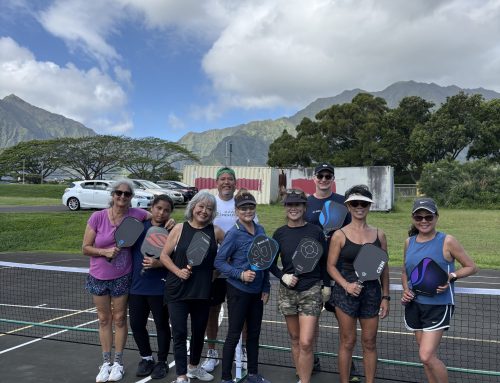
Players on court at Hawaii Pickleball Academy on Oahu

Players at Hawaii Pickleball Academy on Oʻahu — the demographic is younger and more diverse than ever.

The "Retiree Sport" Stereotype Is Dead

The APP's widely cited participation study put the average adult pickleball player age at 34.8 years old. SFIA data shows a base that is 57% male and 43% female, with especially strong engagement among adults 25–44 alongside the longtime 65+ crowd. Whether you're just learning how to play pickleball for the first time or a seasoned competitor, there's a place for you in this sport right now.

The Women's Game Is Growing Fast

France reports that nearly half of all unique pickleball licensees are women. The sport's approachability and social format have made it unusually effective at attracting women into competitive play. Leagues, clinics, and facilities that ignore women's programming in 2026 are ignoring a fast-growing segment of their own market.

The Middle-Age Wave

The 35–54 cohort is driving growth in Canada, France, and the U.S. simultaneously. Middle-aged adults have disposable income, they're looking for social activity and fitness in the same package, and they bring their friends. Looking for structured skill development? Our 5-Week Player Development Program in Honolulu was built exactly for this audience.

The Youth Push Begins

USA Pickleball and Boys & Girls Clubs of America announced a national partnership in April 2026 to bring pickleball to millions of young people. We've seen this firsthand through our own Keiki After-School Pickleball programs at schools across Oʻahu. The players who start in after-school programs in 2026 will be adult recreational players by the early 2030s.


Part Three: The Rules Got Serious

The 2026 USA Pickleball rulebook got a meaningful overhaul — not radical change, but systematic cleanup once casual play evolved into serious competition.

Serve mechanics were tightened — clear upward arc, paddle head below wrist, ball below waist. Spin clarification: spin cannot be added on ball release, but can be applied by paddle at contact. Out calls must now be made promptly. Spectators must not be consulted on line calls.

Rally scoring remains provisional — and now either side can win the final game point on a rally. Adaptive and wheelchair rules received their own dedicated section for the first time. Conduct penalties for dangerous paddle or ball abuse were strengthened.

Knowing when to attack and when to reset is part of the mental game — something we dig into in our post on beating bangers in pickleball.


Part Four: The Pro Game Is Maturing

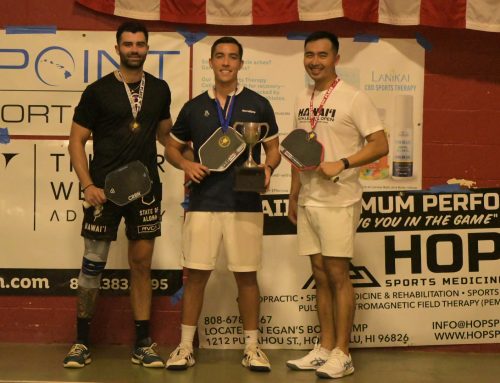
Action from the 2026 Hawaii Pickleball Open Singles Championship

Action from the 2026 Hawaii Pickleball Open™ Singles Championship — competitive pickleball is thriving right here at home.

Familiar Names, Deeper Competition

Anna Leigh Waters continued her dominance in women's singles (Mesa, Texas, Black Desert, Atlanta), while Kate Fahey broke through in Sacramento. Men's singles has been open — Haworth, Staksrud, and Johnson have each won. Ben Johns and Gabriel Tardio dominated men's doubles with five wins by mid-season.

Fired up about your own doubles game? Check out our guide on playing pickleball with your partner and how to move on the court.

Going Global

The 2026 U.S. Open drew more than 55,000 fans and 3,750 players from 53 countries. The AO Pickleball Slam returned to Melbourne Park with a $100,000 prize pool. PPA Tour Asia's 10-stop calendar and the Hong Kong Slam's $1.1 million prize pool signal real infrastructure at scale. Locally, the Hawaii Pickleball Open™ is our contribution to this growing competitive ecosystem.


Part Five: The Business of Pickleball in 2026

Hawaii Pickleball Academy coaching session

The same institutional momentum driving global investment shows up in coaching. Read: How to Become the Most In-Demand Pickleball Coach.

The business of pickleball — 2026
Equipment wholesale sales — 2025
Total market
$409.7M
Paddles
$292.8M
Balls
$116.9M
Source: SFIA manufacturers' sales reporting
Major investments & milestones
🏦
$225M investment into Pickleball Inc.
Led by Apollo Sports Capital, May 2026. Parent of PPA Tour + MLP. Over $140M in 2025 revenue reported.
📈
$1.1M Hong Kong Slam prize pool
PPA Tour Asia, Oct 2026 — the largest pro pickleball event ever staged in Asia.
🏆
$100K AO Pickleball Slam
Tennis Australia at Melbourne Park, Feb 2026. Team Hardware won the title.
US player demographics
Gender split
57% male43% female
Average player age
34.8
years — APP study
Strongest age band
25–44
+ 65+ very active
France: women licensees
~50%
of pickleball licenses
Sources: SFIA · APP · FFT

Courts Are Still the Bottleneck

Court scarcity is one of pickleball's most persistent friction points. USA Pickleball's Play It Forward grant program is awarding two $25,000 grants for court construction or renovation. PMG's rollout PickleDeck surface installs on grass, turf, compacted dirt, and clay. Europe is solving the problem through conversion — the FFT's guide notes four pickleball courts fit on one tennis court.

The $225 Million Moment

On May 1, 2026, Pickleball Inc. announced a $225 million investment led by Apollo Sports Capital, with more than $140 million in 2025 revenue. When Apollo writes a nine-figure check, they've concluded the business model is real. Other investors will follow. Sponsors will recalibrate. Broadcasters will pay more attention.

Equipment: The Paddle Race and the Bigger Opportunity

The premium paddle arms race continues — foam-core, high-spin Gen 3-style paddles dominate the conversation. But the bigger global opportunity may be the accessibility market: starter bundles, replacement balls, and club supply as Asia and Europe scale up. On Oʻahu, we offer equipment rentals so new players can try before they invest.


Part Six: The Friction Points Nobody Should Ignore

The data problem: Global pickleball statistics still aren't apples-to-apples. U.S. figures are clean; Asia's are survey-based; Europe leans on event and federation proxies. Know what kind of number you're reading before building a business case around it.

Court shortage: Pickleball Canada found 15% of players cited a shortage of facilities as a barrier — one in seven players who want to play more, can't.

Noise: The FFT distributing acoustic studies to clubs is a response to real community pushback. Acoustic planning needs to be part of every new facility strategy.

Governance complexity: The IPF, APP's Global Pickleball Alliance, Pickleball Inc., and national federations don't always align. Japan only unified its bodies in April 2026. Progress is real, but friction remains for coaches, pros, and sponsors.

Safety and conduct: Stronger 2026 penalties for paddle/ball abuse, clearer pre-match misconduct rules, and Australia's new code of behaviour all signal a sport dealing with mature-sport problems.


Part Seven: What This All Means

In-demand pickleball coach on Oahu at Hawaii Pickleball Academy

Coaching pickleball in 2026 is a legitimate career path — not a side hustle. See: How to Make Six Figures Teaching Pickleball.

For Coaches

The coaching opportunity is the widest it has ever been. Youth pathways are expanding nationally. The 35–54 demographic is still arriving in big numbers. Adaptive coaching is now formally recognized in the rulebook. The most durable coaching businesses are built on recurring programming — after-school sessions, adult clinics, league management — not one-off drop-in lessons.

We've written about this in depth: how to become a pickleball coach, what it takes to be the most in-demand coach in your market, how to make six figures teaching pickleball, and what we learned running a 10-week after-school program.

For Club Operators

The edge in 2026 isn't the flashiest courts — it's operational reliability. Consistent court availability, acoustic management, and programming that brings players back week after week are the real differentiators. The clubs that win are thinking like facility managers, not just pickleball enthusiasts.

For Equipment Sellers

Premium paddles capture attention at the top end. But the bigger global opportunity is in the accessibility layer — starter packages, club supply, and regional branding as Asia and Europe build out their ecosystems from scratch.

For the Sport Overall

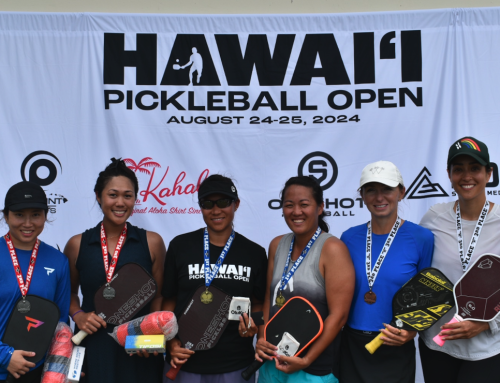
Hawaii Pickleball Open tournament winners on the podium

The Hawaii Pickleball Open™ — competitive pickleball thriving at the community level.

2026 looks less like a novelty phase and more like a transition year into a real global sports business. The participation numbers are no longer surprising — they're expected. The capital is real. The tours are going global. The rules are getting serious. The questions that remain are infrastructure questions, and those are good problems to have.


The Bottom Line

The pickleball boom didn't fade in 2026. It got organized.

From 24.3 million U.S. players to $225 million in institutional investment, from Japan unifying its federation to France hosting its first national championships, from adaptive rules in the official rulebook to the U.S. Open drawing players from 53 countries — this is the year the sport's infrastructure caught up with its momentum.

If you've been waiting for a sign that pickleball is worth taking seriously as a business, a career, or a long-term investment of your time and energy — this is it. The waiting period is over.

Ready to be part of it? Whether you're brand new to the game or looking to take your skills to the next level, Hawaii Pickleball Academy® is Oʻahu's home for serious pickleball instruction. Check out our group lessons, monthly clinics, and private lessons — or dive into the blog for more tips, recaps, and guides.

Data sources include the Sports & Fitness Industry Association (SFIA), Pickleball Canada, the European Pickleball Federation, UPA Asia/YouGov, Pickleball Australia, USA Pickleball, PPA Tour, APP, Tennis Australia, and Pickleball Inc. Some global figures are survey-based estimates rather than federation registration counts.